Author: Michael Parker

  • Marketing dashboards: what I’d show a CEO vs a channel specialist

    Marketing dashboards: what I’d show a CEO vs a channel specialist

    There’s a moment I’ve seen in more businesses than I can count.

    The CEO asks for “a marketing dashboard”.

    Marketing pulls together a beautiful report. It has charts. It has channel breakdowns. It has trend lines and benchmarks. Everyone nods politely.

    And then, a week later, the CEO asks the same question again, just phrased differently:

    “Is marketing working?”

    That’s the gap.

    Most marketing dashboards aren’t wrong, they’re just aimed at the wrong audience. They’re built by marketers, for marketers, and then handed to a leadership team that needs something else entirely.

    A good dashboard is not a data dump. It’s a decision tool.

    And the decisions a CEO needs to make are very different from the decisions a channel specialist needs to make.

    So here’s how I think about it, and what I would actually show each group.


    The core principle: dashboards should answer questions, not display numbers

    Before we get into metrics, it’s worth saying out loud:

    • CEOs don’t want more data. They want fewer surprises.
    • Channel specialists don’t want summaries. They want levers.

    Same business. Same underlying performance. Two completely different lenses.

    If you show a CEO a dashboard full of CTR, CPC, impressions, and engagement rate, you’re asking them to care about the wrong things.

    If you show a paid search specialist a dashboard that only says “marketing revenue is up 12%”, you’re giving them nothing they can act on.

    The art is separating “what’s happening” from “what to do next”.


    What I’d show a CEO

    A CEO dashboard should feel almost boring. That’s a compliment.

    It should be short, commercial, and impossible to misinterpret. It should connect marketing to the numbers the CEO is accountable for: revenue, margin, cash, and growth predictability.

    The CEO’s questions (usually unspoken)

    1. Are we growing?
    2. Is that growth profitable?
    3. Is it sustainable?
    4. What’s the risk?
    5. What do you need from me?

    So the dashboard should answer those questions directly.

    1) Revenue and gross profit attributable to marketing

    Not just revenue. Gross profit.

    If you only report revenue, you can accidentally celebrate unprofitable growth. Especially in ecommerce where discounting, returns, and fulfilment costs are always waiting in the wings.

    If you can’t get to perfect attribution, that’s fine. Directionally correct and consistent beats “perfect” that nobody trusts.

    CEO view:

    • Marketing influenced revenue (trend)
    • Marketing influenced gross profit (trend)
    • Split by new vs returning customers

    2) Customer acquisition efficiency, framed commercially

    I’m not obsessed with CAC as a standalone metric. It’s only meaningful when paired with gross margin and payback.

    CEO view:

    • New customer CAC (blended)
    • Contribution after acquisition (gross profit minus CAC)
    • Payback window: how quickly do we get our money back?

    This turns “marketing spend” into an investment conversation, not a cost conversation.

    3) Pipeline and leading indicators (only the ones that matter)

    CEOs need early warning signs.

    If revenue is a lagging indicator, what shows you the next 4 to 8 weeks?

    For D2C, that might be:

    • qualified traffic trend (not just sessions)
    • conversion rate and AOV trend
    • customer acquisition volume trend

    For B2B, that might be:

    • qualified pipeline created
    • win rate trend
    • sales cycle length trend

    The key is that these should be predictive, not just interesting.

    4) Budget pacing and forecast confidence

    This is where a lot of dashboards fail. CEOs don’t just want to know results, they want to know whether the plan is on track.

    CEO view:

    • Spend vs plan
    • Revenue vs plan
    • Forecast for month/quarter with confidence level
    • What has to be true for the forecast to land

    If marketing can talk in forecasts and assumptions, leadership trusts it more.

    5) One page of risks and decisions required

    This is the part that makes a CEO dashboard genuinely useful.

    CEO view:

    • Top 3 risks (with what you’re doing about them)
    • 1 to 3 decisions needed from leadership
    • Any constraints (stock, pricing, dev capacity, fulfilment)

    A dashboard that doesn’t lead to decisions is just reporting.

    In practice, the CEO dashboard is usually:

    • one page, maybe two
    • monthly for deep review, weekly for a quick pulse
    • heavy on trends, light on channel detail

    What I’d show a channel specialist

    A channel specialist dashboard is the opposite.

    It should be detailed, tactical, and built around controllable levers. It should help someone answer:

    “What do I change this week to improve performance next week?”

    The channel specialist’s questions

    1. Where are we winning and losing?
    2. What’s driving that change?
    3. What can I adjust today?
    4. What tests should I run next?
    5. Where is budget being wasted?

    So you build the dashboard around cause-and-effect.

    1) The channel’s role and target

    Before any metrics, define what “good” looks like for that channel.

    Paid search might be:

    • profitable new customer acquisition
    • protecting brand demand
    • capturing high intent

    Paid social might be:

    • demand creation and prospecting
    • feeding retargeting pools
    • creative iteration

    Email might be:

    • revenue per subscriber
    • repeat purchase
    • reducing reliance on paid

    If you don’t define the job, you’ll judge the channel unfairly.

    2) Performance broken into controllable layers

    Most channels can be debugged by separating performance into layers. For example, paid media:

    • Coverage: are we reaching the right audience?
    • Cost: what are we paying for attention (CPM/CPC)?
    • Quality: are people engaging meaningfully (CTR, landing page engagement)?
    • Conversion: does the traffic convert (CVR, CPA)?
    • Value: is the basket healthy (AOV, gross profit per order)?
    • Efficiency: does it pay back (MER, contribution, CAC vs target)?

    A channel specialist needs all layers because they diagnose different problems.

    A CEO does not.

    3) Segmentation that leads to action

    Channel dashboards should be segmented in ways that map to decisions, such as:

    • prospecting vs retargeting
    • brand vs non-brand (search)
    • new vs returning customers
    • device type
    • audience type
    • creative themes
    • product/category groups

    If a segment doesn’t lead to a different action, don’t include it.

    4) A testing tracker

    If you want channel performance to improve over time, you need structured experimentation.

    Channel view:

    • tests running
    • hypothesis
    • start date
    • primary metric
    • early read
    • next step

    This turns “we’re trying stuff” into “we’re learning predictably”.

    5) Waste and leakage reporting

    This is where good specialists separate themselves from average ones.

    Channel view examples:

    • search terms wasting spend
    • placements with high spend and no contribution
    • audiences with rising frequency and falling conversion
    • creative fatigue signals
    • landing pages with high drop-off
    • SKU-level profitability issues

    It’s not about blame. It’s about keeping the machine clean.

    In practice, the channel dashboard is usually:

    • daily or weekly review cadence
    • more granular
    • built around levers and experiments
    • designed for optimisation, not storytelling

    Why most dashboards fail: they try to please everyone

    A “single dashboard for the whole business” sounds efficient.

    It usually ends up being:

    • too detailed for leadership
    • too vague for specialists
    • and trusted by nobody

    The fix is simple: create a two-layer system.

    1. Executive dashboard: commercial outcomes, trends, risks, decisions
    2. Channel dashboards: levers, diagnostics, tests, waste control

    Same data source. Different views.


    The bridge between the two: translation, not reporting

    This is the part I care about most.

    A great marketing lead doesn’t just show performance. They translate it into commercial implications.

    For example:

    • “Paid social CAC increased” is a report.
    • “Paid social CAC increased because creative fatigue is pushing CPM up and CTR down; we’re refreshing creative and shifting budget temporarily into search while it stabilises” is leadership.

    The CEO doesn’t need the CPM chart. They need confidence you understand the system.


    A simple template you can copy

    If you want something practical, here’s a clean structure.

    CEO dashboard (monthly, plus weekly pulse)

    • Revenue influenced by marketing (trend)
    • Gross profit influenced by marketing (trend)
    • New customers acquired (trend)
    • Contribution after acquisition and payback window
    • Spend vs plan, revenue vs plan, forecast
    • Top 3 risks and decisions needed

    Channel dashboard (weekly)

    • Core target metric (CPA, contribution, ROAS, etc.)
    • Funnel layers (cost, quality, conversion, value)
    • Segments that map to actions
    • Test tracker
    • Waste/leakage report

    The bottom line

    A CEO dashboard should answer “Are we winning, and is it sustainable?”
    A channel specialist dashboard should answer “What do I do next to win more?”

    When those are separated properly, something nice happens:

    • leadership trusts marketing more
    • specialists move faster
    • and the business stops arguing about the wrong numbers
  • CAC is not a KPI unless you know your gross margin

    CAC is not a KPI unless you know your gross margin

    Customer Acquisition Cost has become one of those metrics that gets quoted with a straight face, usually in the same breath as “efficiency” and “scalability”.

    “Our CAC is £42.”
    “Great, that’s down from £55.”
    “Perfect, we’ll scale spend.”

    And sometimes that’s absolutely the right call.

    But just as often, CAC is a number that creates false confidence. It feels precise. It feels disciplined. It feels like the grown-up way to run marketing.

    The problem is that CAC on its own is a floaty number. It’s not good or bad. It’s just… a cost.

    A cost is only meaningful when you compare it to what you get back.

    And what you get back, in the real world, is not revenue. It’s gross profit.

    That’s why CAC is not a KPI unless you know your gross margin.


    Why this matters more than most teams realise

    Most marketing dashboards were built by people who didn’t carry commercial responsibility.

    Not because they were careless, but because that’s how organisations evolved. Marketing got judged on traffic, leads, CTR, ROAS, sometimes revenue, while finance and trading worried about margin, returns, and contribution.

    In ecommerce and modern B2B, that split is expensive.

    Because you can “improve CAC” and still make the business worse.

    You can also have a “high CAC” and be making a lot of money.

    CAC is only useful when it’s connected to unit economics.


    A quick definition, in plain English

    CAC is what it costs you to acquire a new customer.

    Usually that means:

    • paid media spend
    • agency costs (sometimes)
    • creative costs (sometimes)
    • promotional discounting (rarely included, but it should be considered)
    • sales costs if you’re in B2B (commission, SDR time, tools)

    The common mistake is treating CAC like a standalone score, like a school grade.

    It’s not.

    CAC is a component in a profit equation.


    Gross margin is the missing half of the sentence

    Here’s the simplest way to think about it:

    Revenue is vanity. Gross profit is reality.

    If you sell a product for £100 and your gross margin is 60%, you have £60 to work with (before overheads).

    If you sell a product for £100 and your gross margin is 20%, you have £20 to work with.

    Those are completely different businesses.

    Now imagine both businesses report the same CAC: £30.

    • Business A (60% margin): CAC £30 might be perfectly healthy.
    • Business B (20% margin): CAC £30 is a guaranteed loss on the first purchase.

    Same CAC. Opposite meaning.

    That’s why CAC without gross margin is like tracking fuel consumption without knowing how big the tank is.


    The uncomfortable truth: you can’t “optimise” your way out of bad economics

    If your gross margin is thin, you have three options:

    1. Increase margin
    2. Increase repeat purchase (LTV)
    3. Reduce acquisition cost

    Most teams jump straight to option three because it’s the one marketing can influence quickly.

    But if the underlying margin is too low, “reducing CAC” becomes a treadmill. You chase cheaper clicks, lower intent audiences, shallow offers, and eventually you trade growth quality for growth volume.

    In those cases, the fix is usually commercial, not marketing:

    • price architecture
    • bundling
    • product mix
    • supplier terms
    • shipping and returns policy
    • fulfilment efficiency
    • product positioning that supports price, not just conversion

    Marketing can help with many of those, but it starts with admitting the problem isn’t “ads”.


    The metric you actually want: contribution after acquisition

    If you want a KPI that tells you whether acquisition is healthy, use something like:

    Gross profit per first order – CAC = contribution after acquisition

    That number can be:

    • positive (good)
    • slightly negative (fine if repeat purchase is strong)
    • deeply negative (you’re buying revenue, not building profit)

    You can run this at different levels:

    • by channel
    • by campaign type
    • by product category
    • by customer segment
    • by landing page or offer type

    This is where marketing becomes commercial, and where the real decisions get easier.


    A simple example (with numbers you can feel)

    Let’s say you run a D2C brand.

    Scenario 1: “CAC looks good”

    • AOV: £80
    • Gross margin: 55%
    • Gross profit on first order: £44
    • CAC: £35
    • Contribution after acquisition: £9

    You’ve got £9 left to cover fulfilment overhead, customer service, and fixed costs. Not amazing, but viable. If you have repeat purchase, you’re in decent shape.

    Scenario 2: “CAC is the same, but the business is broken”

    • AOV: £80
    • Gross margin: 25%
    • Gross profit on first order: £20
    • CAC: £35
    • Contribution after acquisition: –£15

    You are losing £15 every time you acquire a customer. You might still grow revenue, and dashboards will look exciting, but the business is leaking.

    If you don’t have strong repeat purchase, you’re just paying to move money around.

    Scenario 3: “CAC looks high, but it’s a great business”

    • AOV: £150
    • Gross margin: 70%
    • Gross profit on first order: £105
    • CAC: £55
    • Contribution after acquisition: £50

    Somebody will still complain CAC is “too high” because they’re anchored on a number, not economics.

    This is how good brands get stuck. They stop spending because the CAC number “feels high”, while profit is sitting right there waiting to be scaled.


    But what about LTV?

    Yes, lifetime value matters, and in many businesses it’s the real engine.

    But LTV is also the place where people tell themselves comforting stories.

    There are two versions of LTV:

    1) Forecast LTV

    A spreadsheet assumption.

    2) Real LTV

    What your cohorts actually do over 6, 12, 18 months.

    If you want to use LTV to justify CAC, you need cohort-based evidence, not hope.

    And even then, gross margin still matters because you need gross profit LTV, not revenue LTV.

    A customer who spends £300 over a year with a 30% margin is not the same as a customer who spends £300 with a 70% margin.

    Same top line. Different business.


    The “discount CAC” trap

    One of the easiest ways to reduce CAC is to increase conversion by discounting heavily.

    It works. It also quietly damages economics.

    Because a discount isn’t just “a marketing lever”. It’s margin.

    If you offer 20% off to improve conversion, you didn’t reduce CAC. You moved the cost from ads into margin.

    Sometimes that’s still the right move. But you need to model it honestly.

    If your dashboards treat discounts as “sales performance” rather than “acquisition cost”, your CAC number will look artificially healthy.

    And your profit will tell a different story.


    The questions I ask before I trust a CAC number

    If I’m looking at a CAC figure in isolation, these are the things I want to know immediately:

    1. What is gross margin by product/category?
    2. What is your blended gross profit per first order?
    3. What’s the returns rate and what does it do to margin?
    4. How much of this CAC is being “subsidised” by discounting?
    5. What’s the payback window you actually need?
      (Immediate? 30 days? 90 days? 12 months?)
    6. What do cohorts do after purchase?
      (Not what you hope. What they do.)
    7. What is the operational cost to fulfil and support an order?
      (Gross margin isn’t the end of the story.)

    Once you have those answers, CAC becomes useful.

    Without them, it’s just a number that makes people feel in control.


    What to do next (practical steps)

    If you want to make CAC a KPI you can trust, do this in order:

    1) Build a simple unit economics view

    For your average first order:

    • AOV
    • gross margin %
    • returns impact
    • gross profit
    • CAC
    • contribution after acquisition

    2) Split it by channel

    Paid social, paid search, affiliates, marketplaces ads, email capture offers, SEO-assisted, etc.

    The goal isn’t perfection. It’s directionally correct decision-making.

    3) Run cohort analysis quarterly

    Track gross profit LTV by cohort and by acquisition source.

    This is where you learn which acquisition is truly profitable, not just which acquisition “converts”.

    4) Align marketing and commercial goals

    If marketing is judged on CAC and finance is judged on margin, you will get internal conflict and inconsistent decisions.

    If both are judged on contribution, everyone suddenly pulls in the same direction.


    The bottom line

    CAC is not a KPI. It’s a cost.

    A cost becomes a KPI only when you can say, with confidence:

    “This cost is acceptable because our gross profit and customer behaviour make it profitable within the timeframe the business needs.”

    If you don’t know gross margin, CAC is just a number that can lead you into very expensive optimism.

    If you do know gross margin, and you tie CAC to contribution and payback, it becomes one of the most useful commercial metrics you can have.

    And it turns marketing into what it should be: a growth function that improves profit, not just performance.

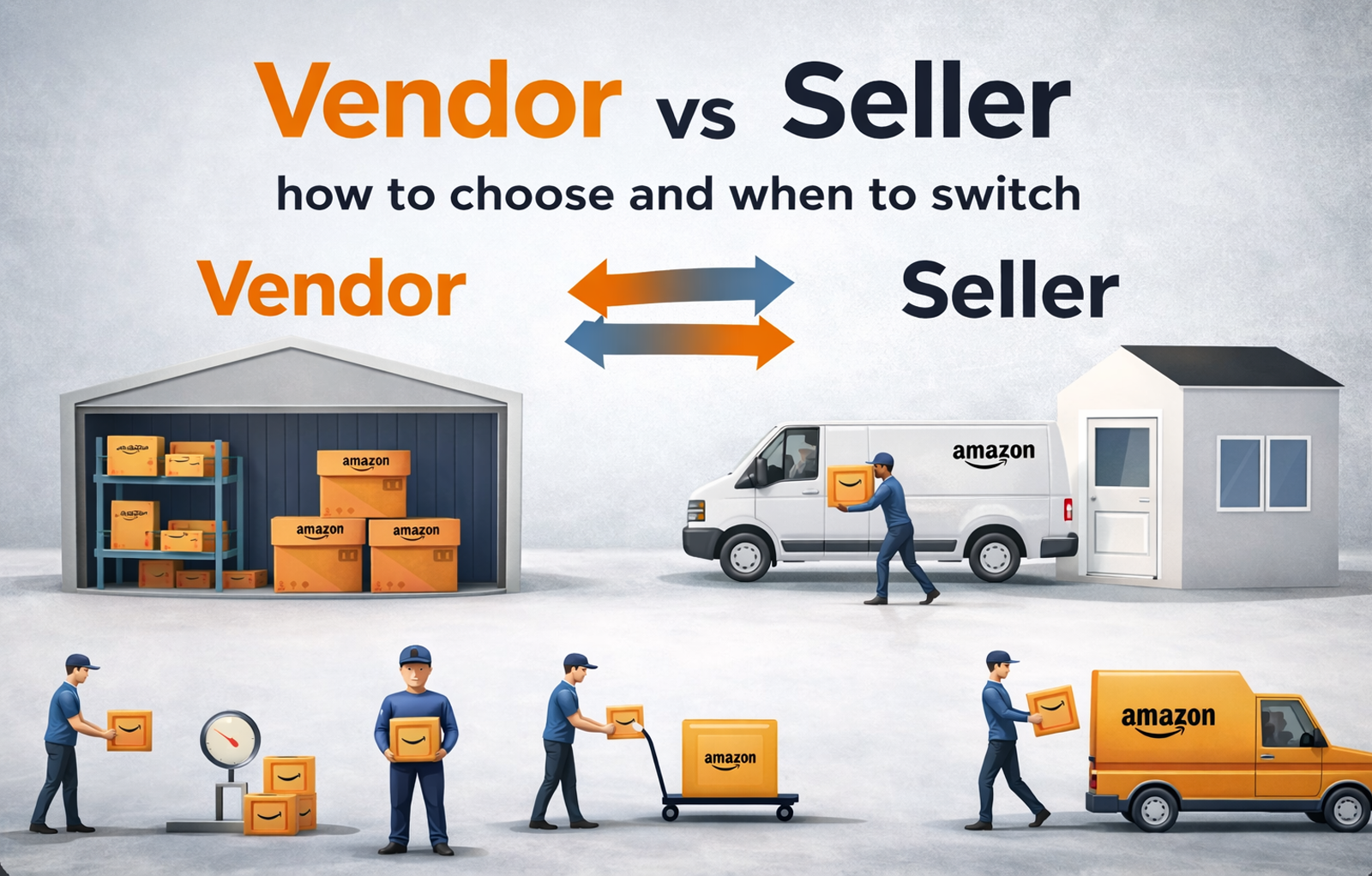
  • Vendor vs Seller: how to choose and when to switch

    Vendor vs Seller: how to choose and when to switch

    If you’ve ever sat in a meeting where someone says, “We should just get on Amazon”, you’ll know how it goes.

    It sounds obvious. Your customers are already there. The traffic is enormous. You can be live quickly. And in a world where attention is expensive, marketplaces feel like a shortcut.

    Sometimes they are.

    But if marketplaces were simply “a sales channel”, they wouldn’t be as dominant as they are. They’d be interchangeable. They’re not.

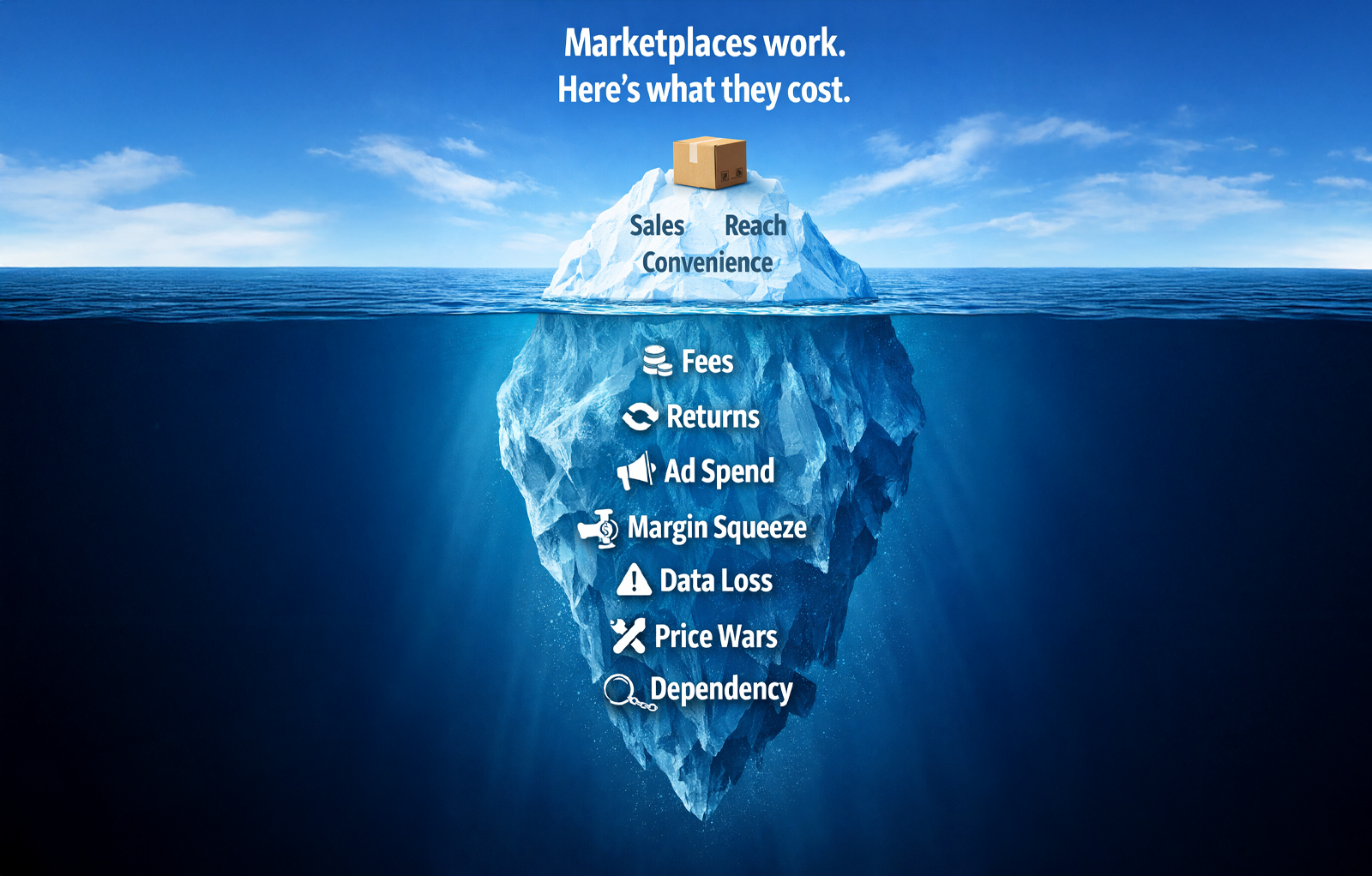
    Marketplaces work because they solve a very specific problem for customers, and they solve it better than almost anyone else. The catch is that the very things that make them brilliant for customers create the hidden costs for brands.

    Let’s unpack both sides properly.


    The real reason marketplaces work

    Most brands talk about marketplaces as a distribution decision.

    Customers experience them as a risk-reduction decision.

    When people buy on a marketplace, they’re not just choosing a product. They’re choosing a system.

    1) Trust is already built (and you’re borrowing it)

    A customer doesn’t wake up trusting a brand they’ve never heard of. They do, however, trust Amazon to deliver the thing they ordered, on time, with a straightforward returns process.

    That trust is the real product marketplaces sell.

    The marketplace is essentially saying: “You don’t need to do loads of homework. We’ve built the infrastructure, the policies, the payments, the delivery promise, and the social proof. Just pick something.”

    That’s why unknown brands can sell at all on marketplaces. They’re borrowing trust.

    2) Convenience is not a feature, it’s the point

    If you run an independent ecommerce site, you know how many small frictions add up:

    • another password
    • another checkout flow
    • another delivery threshold
    • another returns policy
    • another “is this site legit?” moment

    Marketplaces remove most of that. Saved payment details, familiar UI, reliable delivery options, quick support, predictable returns.

    People don’t love marketplaces because they’re exciting. They love them because they are easy.

    3) Discovery happens at the moment of intent

    Brand websites are great once someone already wants you.

    Marketplaces are where people go when they haven’t decided yet.

    That is a huge difference.

    A marketplace search is usually high intent. “Buy X.” “Best Y.” “Replacement Z.” You’re meeting the customer when they are already in purchase mode, not persuading them to become in purchase mode.

    It’s like having your products sitting inside the aisle where the customer has already walked in with a trolley.

    4) They compress choice into something manageable

    A marketplace can show 5,000 options. That should overwhelm people.

    Instead, the algorithm, filters, reviews, badges, delivery promises, and “frequently bought together” widgets do something clever. They take endless choice and turn it into a feeling of confidence.

    Customers are not just buying the item. They’re buying the reassurance that they’ve chosen “the normal option” that other people chose and were happy with.

    5) The flywheel is real (and brutal)

    Marketplaces get stronger because they are already strong:

    • more customers attracts more sellers
    • more sellers increases selection and pricing competitiveness
    • better selection attracts more customers
    • more demand attracts more advertising spend
    • more ad spend makes the platform even more profitable to improve

    This is why marketplaces rarely feel “finished”. They keep getting better at the things customers care about: speed, availability, confidence, simplicity.

    If you’re a brand, you can choose to fight that, ignore it, or ride it. But you can’t pretend it isn’t true.


    So what’s the hidden cost?

    Here’s the bit that catches people out. Most teams can list the obvious fees.

    What they underestimate is what they’re giving up in exchange for borrowed trust and convenience.

    1) Margin erosion is not just “the fees”

    Yes, there are referral fees, fulfilment fees, storage fees, returns processing, and sometimes subscription fees.

    But the bigger hit often comes from the second-order costs:

    • you’ll likely need marketplace advertising to be visible, especially in competitive categories
    • you’ll often need sharper pricing to win the click and the Buy Box
    • you’ll have extra operational overhead: content, compliance, inventory rules, case management
    • returns rates can be higher, and policies can be less forgiving

    The mistake is modelling marketplaces like a normal wholesale account, or like your own D2C channel. It’s neither.

    A useful mindset is this: marketplaces are a paid acquisition channel with a fulfilment layer attached.

    If you treat it that way, the economics become clearer.

    2) You’re renting demand, not building it

    When you sell on your own site, every improvement you make compounds:

    • better email list
    • better customer data
    • better repeat purchase
    • better conversion rate
    • better LTV
    • stronger brand recall

    On a marketplace, many of those benefits don’t flow back to you in the same way.

    You can still build a brand presence, and you should. But you’re largely operating inside somebody else’s relationship with the customer.

    That’s why it can feel great in the short term and strangely fragile in the long term.

    3) Your brand becomes a line item in a comparison table

    On most marketplaces, customers are trained to compare:

    • price
    • delivery promise
    • review score
    • number of reviews
    • availability
    • returns simplicity

    That’s it.

    Your brand story matters far less unless you deliberately invest in assets that carry it, such as premium imagery, A+ content, video, storefronts, packaging experience, and consistent review quality.

    If you don’t, you’re not competing as a brand. You’re competing as a SKU.

    And SKU competition tends to turn into price competition.

    4) Channel conflict is real, even when nobody admits it

    If you have distributors, retailers, or existing wholesale partners, marketplaces can create tension quickly:

    • price transparency exposes inconsistencies
    • one rogue seller can undermine your whole pricing architecture
    • partners see the marketplace as you “going around them”, even if you’re not
    • your own D2C site has to justify why it exists if the marketplace is cheaper and faster

    This is not a reason to avoid marketplaces. It’s a reason to plan your channel strategy properly before you go live.

    5) You inherit platform risk

    Marketplaces can change rules, policies, fees, and algorithmic visibility with very little warning.

    You can also be hit by:

    • listing suppression due to compliance flags
    • account health issues
    • review manipulation, both positive and negative
    • counterfeit or unauthorised resellers
    • Buy Box loss due to stock, delivery promise, or pricing parity issues

    None of this is theoretical. If you scale on marketplaces, you will encounter some version of it.

    That risk is the rent you pay for access to their demand.

    6) Operational complexity is usually underestimated

    Marketplaces are not “list it and forget it”.

    They require:

    • content that fits platform rules, not just what looks nice
    • constant availability management
    • forecasting and replenishment discipline
    • performance monitoring at SKU level
    • customer service workflows that align to platform expectations
    • ongoing ad optimisation, especially if competitors are active

    If you do not resource it properly, you get the worst of both worlds: thin margins and inconsistent performance.


    The practical question: when do marketplaces make sense?

    Marketplaces are brilliant when they are used deliberately, with clear economics and clear intent.

    They are dangerous when they are used as a panic button.

    Here are the situations where they usually make sense:

    Marketplaces tend to work well when:

    • your product solves a clear, searchable problem (replacement parts, essentials, functional products)
    • you have strong unit economics and can absorb fees and ads
    • you can win on availability, delivery promise, or review quality
    • you can differentiate with bundles, variations, accessories, or a clearer offer
    • you have operational maturity: stock, fulfilment, content, customer service

    Marketplaces are harder when:

    • you rely on storytelling and nuance to justify your price
    • your margins are already tight
    • you have heavy returns exposure or fragile items
    • you cannot police unauthorised resellers
    • your category is dominated by ad-heavy incumbents and you cannot fund visibility

    How to avoid the hidden costs

    This is the part most people skip. They list products, run ads, see sales, then wonder why profit feels underwhelming and the brand feels weaker.

    A few principles make a big difference.

    1) Build a marketplace P&L per SKU, not per channel

    You want to know, for each product:

    • selling price
    • cost of goods
    • fulfilment and platform fees
    • expected ad cost per sale
    • expected returns cost
    • contribution margin

    If the numbers only work in a “perfect world” scenario, they do not work.

    2) Decide your role: acquisition, volume, or clearance

    Marketplaces can serve different jobs:

    • Acquisition: introduce new customers to the brand, then pull them into repeat purchase elsewhere
    • Volume: a dependable revenue engine with optimised operations
    • Clearance: move end-of-line stock without damaging your core channel

    Pick the job. Then build the strategy around that job. Most marketplace pain comes from trying to do all three at once.

    3) Design your assortment for the channel

    Do not simply mirror your website.

    Consider:

    • marketplace-only bundles that protect margin
    • accessory-led offers that increase basket size
    • variations that create a stronger “choice architecture”
    • hero SKUs that earn reviews and visibility, then halo the range

    4) Protect brand perception deliberately

    If you care about brand, invest in the assets that carry it inside the marketplace:

    • premium imagery
    • clear, benefit-led copy
    • A+ content and video where available
    • a consistent visual system across listings
    • packaging that reinforces trust and quality

    The marketplace will not do this for you.

    5) Treat advertising as part of the cost of sale

    Marketplace ads are not optional in many categories. Budget for them from the start, and judge them against contribution margin, not vanity ROAS.

    ROAS can look “good” while profit is quietly disappearing.


    The bottom line

    Marketplaces work because they reduce customer risk and friction better than any individual brand can.

    That’s the magic.

    But borrowed trust comes with rent. The rent is margin pressure, reduced customer ownership, platform risk, operational complexity, and a constant pull towards commoditisation.

    If you go in with your eyes open, marketplaces can be an incredible growth engine.

    If you go in assuming they are just another sales channel, they can quietly become a high-effort, low-margin machine that you can’t turn off.

    The aim is not to fear marketplaces. It’s to use them on purpose.

    If you want, I can also turn this into:

    • a shorter LinkedIn version (with a strong hook and a clean takeaway)
    • a one-page “Should we launch on marketplaces?” checklist you can share with prospects
    • a simple SKU-level marketplace profit calculator layout you can rebuild in Excel or Sheets

    Write the following article: “Vendor vs Seller: how to choose and when to switch” It needs to be warm, engaging and human – avoiding all the typical hallmarks of AI-written content. The article should also position me as an expert and offer real value

    Vendor vs Seller: how to choose and when to switch

    If you’ve ever tried to make sense of Amazon’s “Vendor” and “Seller” models, you’ve probably had the same thought most teams do:

    Why does this feel needlessly confusing?

    Two programmes. Two sets of terminology. Two different fee structures. Two different definitions of “control”. And a whole lot of advice online that boils down to: “Vendor is for big brands. Seller is for everyone else.”

    That’s not wrong, but it’s not useful either.

    Because in practice, the best choice depends on what you’re optimising for: cash flow, margin, control, speed, brand protection, operational simplicity, or long term resilience. You rarely get to maximise all of them at once.

    I’ve managed both models, on both the Vendor and Seller side, and I’ve seen good businesses hurt themselves by choosing the wrong setup for the stage they’re at. This article is the decision framework I wish most people had before they commit.


    First: what Vendor and Seller actually mean

    Vendor (1P) in plain English

    You sell to Amazon like a retailer. Amazon buys your stock at a wholesale price, then Amazon resells it to the customer.

    Amazon controls:

    • retail pricing (often aggressively)
    • promotions (sometimes without asking nicely)
    • fulfilment experience (usually great, but you’re not steering it)
    • a large chunk of the customer-facing “truth” in the listing

    You get:

    • large purchase orders when things are going well
    • simpler logistics (ship to Amazon, Amazon does the rest)
    • less day-to-day customer service load
    • often stronger credibility in some categories, especially historically

    Seller (3P) in plain English

    You sell direct to the customer on Amazon’s marketplace. You own the listing and the retail price, and you either fulfil via FBA or ship yourself.

    You control:

    • retail pricing (within marketplace rules and competition reality)
    • inventory decisions and replenishment strategy
    • content and merchandising (more than Vendor, generally)
    • your ability to respond quickly and test

    You take on:

    • more operational complexity
    • higher visible fees (referral, fulfilment, storage, etc.)
    • more performance management (account health, metrics, cases)

    Neither model is “better”. They are optimised for different jobs.


    The real trade-off: control vs simplicity

    Here’s the most helpful way I’ve found to frame it:

    • Vendor is operationally simpler but commercially less controllable
    • Seller is commercially controllable but operationally more demanding

    That’s the whole game.

    The rest is just nuance, and the nuance matters.


    Choosing Vendor: when it’s the right move

    Vendor tends to be the better fit when you have the scale and predictability to play the “retailer relationship” game.

    Vendor is usually a strong choice if:

    • Amazon can drive meaningful volume without constant intervention
    • Your wholesale margin structure is healthy (you can sell to Amazon profitably even if they discount at retail)
    • You want cleaner operations: fewer moving parts, fewer daily fires
    • You’re confident in supply and lead times: you can actually fulfil POs consistently
    • You can absorb payment terms without it becoming a cash flow chokehold
    • Your category naturally behaves like retail (fast-moving, commodity-ish, and Amazon is already a primary destination)

    The upside of Vendor (when it works)

    Vendor can feel calmer. You’re not living and dying by ad tuning, conversion rate micro-optimisations, or weekly stock coverage anxiety. Amazon places orders, you deliver, they sell.

    And for some brands, that predictability is the point.

    The risk you need to accept

    Vendor works best until it doesn’t. The biggest Vendor risk is waking up one day and realising:

    • Amazon has forced retail pricing down
    • your margins are quietly thinner than you assumed
    • your product is being promoted in ways that pull future demand forward
    • and you don’t have an alternative engine to protect you

    Vendor can be brilliant, but it can also put you in the passenger seat.


    Choosing Seller: when it’s the right move

    Seller tends to be the better fit when you care about speed, margin control, and resilience.

    Seller is usually a strong choice if:

    • You need pricing and margin control (or you’re tired of watching Amazon discount)
    • You want to build a repeatable growth engine (ads, content, conversion, reviews, listing optimisation)
    • Your range benefits from merchandising (bundles, variations, accessories, upsell logic)
    • You’re launching new products and need fast iteration
    • You can run good operations: forecasting, replenishment, stock health, and performance metrics
    • You want to protect brand positioning more actively

    The upside of Seller (when it works)

    When Seller is done properly, it becomes a controllable machine:

    • you can influence demand with advertising
    • you can respond quickly to competitors
    • you can protect margin by changing strategy, not just accepting retail realities
    • you can build review velocity and listing strength deliberately

    Seller is more work, but it gives you levers.

    The risk you need to accept

    Seller punishes sloppy operations. Stockouts, poor forecasts, weak content, or reactive advertising can turn a profitable range into a mess quickly.

    If Vendor is “retail relationship management”, Seller is “retail operations plus performance marketing”.


    The part most people miss: the Buy Box and who owns the offer

    If you take nothing else from this article, take this.

    On Amazon, your business lives or dies based on offer ownership and Buy Box consistency.

    • In Vendor, Amazon is usually the offer.
    • In Seller, you are the offer (assuming you control authorised sellers and pricing).

    If you are Vendor and there are other sellers undercutting, or Amazon is out of stock, you can lose momentum and visibility. If you’re Seller and your own offer is healthy, you can protect continuity far more reliably.

    This is one of the most common reasons brands switch.


    A simple decision framework

    Instead of starting with “Which is better?”, start with “What are we optimising for this year?”

    If your priority is:

    • Operational simplicity → lean Vendor
    • Margin and pricing control → lean Seller
    • Speed to launch and test → lean Seller
    • Stable volume with less day-to-day work → lean Vendor
    • Brand protection and long term resilience → lean Seller
    • Cash flow predictability → depends on terms and inventory model, but usually Seller gives more immediate control

    Then apply reality checks:

    Reality check 1: Can we actually execute Seller properly?

    If you cannot maintain stock health, handle cases, run ads, and keep listings clean, Seller will be painful.

    Reality check 2: Is Amazon going to treat us like a priority Vendor?

    Vendor works best when Amazon wants you. If you’re small, niche, or low volume, you may not get the support you expect. That can lead to slow issue resolution, weak merchandising, and frustrating negotiations.


    When to switch: the signs it’s time

    Switching models is not a badge of honour. It’s a strategic move. Here are the most common signals.

    Signs you should consider switching from Vendor to Seller

    1. Retail pricing is being driven down and you can’t protect margin
      If Amazon’s retail price erodes brand perception and destroys profitability, Seller gives you more levers.
    2. Amazon is inconsistent with inventory, and you’re losing sales due to stockouts
      As Seller, you can hold stock and keep the offer live (especially with FBA).
    3. You want to run a more deliberate growth strategy
      Vendor can be surprisingly limiting when you want to test bundles, iterate content quickly, or run a performance-led approach.
    4. You’re launching new products and Amazon isn’t prioritising them
      Vendor is often slow for NPD unless Amazon is excited about it.
    5. You’re tired of being surprised
      If you’re constantly reacting to chargebacks, shortages, co-op discussions, or retail changes you didn’t agree to, Seller can feel more stable.

    Signs you should consider switching from Seller to Vendor

    Yes, it happens, and sometimes it’s the right call.

    1. Operational burden is distracting you from core business growth
      If your team is stuck firefighting account health, returns, or ads, and you can’t resource it properly, Vendor can simplify.
    2. Your category behaves like pure retail
      Some products win primarily on availability, price, and convenience. Vendor can be a smoother model if the numbers work.
    3. Amazon offers a commercially attractive deal
      If terms, support, and volume commitments are strong, Vendor can make sense.
    4. You are struggling to win the Buy Box due to multi-seller competition
      If you cannot control the seller landscape, Vendor can sometimes stabilise. Sometimes it makes it worse. This needs careful analysis.

    How to switch without breaking the business

    Switching isn’t as simple as “turn one off, turn the other on”. The danger zone is when you end up with two offers competing against each other, or you lose listing control and your visibility collapses for weeks.

    A sensible transition plan usually includes:

    1) Build a true SKU-level profit model

    Before you move anything, model the economics for the top SKUs:

    • fees, fulfilment, ad costs
    • expected retail price and conversion
    • returns rate assumptions
    • inbound shipping and storage impacts

    Don’t switch based on hope. Switch based on contribution margin.

    2) Decide what the channel is for

    Are you switching to:

    • protect margin?
    • stabilise stock availability?
    • unlock faster growth?
    • regain control of brand presentation?

    Be explicit. It changes your operating plan.

    3) Manage offer ownership and seller landscape

    This is where most mess happens:

    • clean up unauthorised sellers
    • address price parity issues
    • consider bundles or exclusive SKUs to reduce direct comparability
    • align fulfilment method so your offer remains competitive

    4) Expect a learning curve and resource accordingly

    Seller needs daily attention, especially early. If you move to Seller without assigning a real owner, you will get the downside and miss the upside.


    The “best of both” approach (and why it often becomes the worst of both)

    Some brands try to run Vendor and Seller in parallel.

    Sometimes this is intentional and strategic. Often it’s accidental.

    You can do it, but you must be clear which model is primary, otherwise you create:

    • internal confusion
    • price competition against yourself
    • Buy Box instability
    • messy inventory allocation
    • and a situation where neither channel performs as well as it should

    If you want both, design it carefully. For example:

    • Vendor for a core replenishment range
    • Seller for bundles, NPD, and premium positioning
    • clear pricing architecture so you’re not undercutting yourself

    The bottom line

    Vendor vs Seller isn’t a binary “right answer”. It’s a choice between two operating models.

    Vendor is a retailer relationship with simpler operations and less control.
    Seller is a direct retail business with more control and more responsibility.

    The best decision is the one that matches your stage, your resources, and what you’re actually trying to achieve this year.

    If you’re unsure, start here:

    • If you want simplicity and can tolerate losing control: Vendor can work.
    • If you want control and are willing to run a more hands-on machine: Seller is usually the better long term bet.

    And if you’re thinking about switching, don’t ask “Which is better?” Ask:
    What problem are we trying to solve, and what will the economics look like per SKU when we solve it?
  • The real reason marketplaces work (and the hidden costs)

    The real reason marketplaces work (and the hidden costs)

    If you’ve ever sat in a meeting where someone says, “We should just get on Amazon”, you’ll know how it goes.

    It sounds obvious. Your customers are already there. The traffic is enormous. You can be live quickly. And in a world where attention is expensive, marketplaces feel like a shortcut.

    Sometimes they are.

    But if marketplaces were simply “a sales channel”, they wouldn’t be as dominant as they are. They’d be interchangeable. They’re not.

    Marketplaces work because they solve a very specific problem for customers, and they solve it better than almost anyone else. The catch is that the very things that make them brilliant for customers create the hidden costs for brands.

    Let’s unpack both sides properly.


    The real reason marketplaces work

    Most brands talk about marketplaces as a distribution decision.

    Customers experience them as a risk-reduction decision.

    When people buy on a marketplace, they’re not just choosing a product. They’re choosing a system.

    1) Trust is already built (and you’re borrowing it)

    A customer doesn’t wake up trusting a brand they’ve never heard of. They do, however, trust Amazon to deliver the thing they ordered, on time, with a straightforward returns process.

    That trust is the real product marketplaces sell.

    The marketplace is essentially saying: “You don’t need to do loads of homework. We’ve built the infrastructure, the policies, the payments, the delivery promise, and the social proof. Just pick something.”

    That’s why unknown brands can sell at all on marketplaces. They’re borrowing trust.

    2) Convenience is not a feature, it’s the point

    If you run an independent ecommerce site, you know how many small frictions add up:

    • another password
    • another checkout flow
    • another delivery threshold
    • another returns policy
    • another “is this site legit?” moment

    Marketplaces remove most of that. Saved payment details, familiar UI, reliable delivery options, quick support, predictable returns.

    People don’t love marketplaces because they’re exciting. They love them because they are easy.

    3) Discovery happens at the moment of intent

    Brand websites are great once someone already wants you.

    Marketplaces are where people go when they haven’t decided yet.

    That is a huge difference.

    A marketplace search is usually high intent. “Buy X.” “Best Y.” “Replacement Z.” You’re meeting the customer when they are already in purchase mode, not persuading them to become in purchase mode.

    It’s like having your products sitting inside the aisle where the customer has already walked in with a trolley.

    4) They compress choice into something manageable

    A marketplace can show 5,000 options. That should overwhelm people.

    Instead, the algorithm, filters, reviews, badges, delivery promises, and “frequently bought together” widgets do something clever. They take endless choice and turn it into a feeling of confidence.

    Customers are not just buying the item. They’re buying the reassurance that they’ve chosen “the normal option” that other people chose and were happy with.

    5) The flywheel is real (and brutal)

    Marketplaces get stronger because they are already strong:

    • more customers attracts more sellers
    • more sellers increases selection and pricing competitiveness
    • better selection attracts more customers
    • more demand attracts more advertising spend
    • more ad spend makes the platform even more profitable to improve

    This is why marketplaces rarely feel “finished”. They keep getting better at the things customers care about: speed, availability, confidence, simplicity.

    If you’re a brand, you can choose to fight that, ignore it, or ride it. But you can’t pretend it isn’t true.


    So what’s the hidden cost?

    Here’s the bit that catches people out. Most teams can list the obvious fees.

    What they underestimate is what they’re giving up in exchange for borrowed trust and convenience.

    1) Margin erosion is not just “the fees”

    Yes, there are referral fees, fulfilment fees, storage fees, returns processing, and sometimes subscription fees.

    But the bigger hit often comes from the second-order costs:

    • you’ll likely need marketplace advertising to be visible, especially in competitive categories
    • you’ll often need sharper pricing to win the click and the Buy Box
    • you’ll have extra operational overhead: content, compliance, inventory rules, case management
    • returns rates can be higher, and policies can be less forgiving

    The mistake is modelling marketplaces like a normal wholesale account, or like your own D2C channel. It’s neither.

    A useful mindset is this: marketplaces are a paid acquisition channel with a fulfilment layer attached.

    If you treat it that way, the economics become clearer.

    2) You’re renting demand, not building it

    When you sell on your own site, every improvement you make compounds:

    • better email list
    • better customer data
    • better repeat purchase
    • better conversion rate
    • better LTV
    • stronger brand recall

    On a marketplace, many of those benefits don’t flow back to you in the same way.

    You can still build a brand presence, and you should. But you’re largely operating inside somebody else’s relationship with the customer.

    That’s why it can feel great in the short term and strangely fragile in the long term.

    3) Your brand becomes a line item in a comparison table

    On most marketplaces, customers are trained to compare:

    • price
    • delivery promise
    • review score
    • number of reviews
    • availability
    • returns simplicity

    That’s it.

    Your brand story matters far less unless you deliberately invest in assets that carry it, such as premium imagery, A+ content, video, storefronts, packaging experience, and consistent review quality.

    If you don’t, you’re not competing as a brand. You’re competing as a SKU.

    And SKU competition tends to turn into price competition.

    4) Channel conflict is real, even when nobody admits it

    If you have distributors, retailers, or existing wholesale partners, marketplaces can create tension quickly:

    • price transparency exposes inconsistencies
    • one rogue seller can undermine your whole pricing architecture
    • partners see the marketplace as you “going around them”, even if you’re not
    • your own D2C site has to justify why it exists if the marketplace is cheaper and faster

    This is not a reason to avoid marketplaces. It’s a reason to plan your channel strategy properly before you go live.

    5) You inherit platform risk

    Marketplaces can change rules, policies, fees, and algorithmic visibility with very little warning.

    You can also be hit by:

    • listing suppression due to compliance flags
    • account health issues
    • review manipulation, both positive and negative
    • counterfeit or unauthorised resellers
    • Buy Box loss due to stock, delivery promise, or pricing parity issues

    None of this is theoretical. If you scale on marketplaces, you will encounter some version of it.

    That risk is the rent you pay for access to their demand.

    6) Operational complexity is usually underestimated

    Marketplaces are not “list it and forget it”.

    They require:

    • content that fits platform rules, not just what looks nice
    • constant availability management
    • forecasting and replenishment discipline
    • performance monitoring at SKU level
    • customer service workflows that align to platform expectations
    • ongoing ad optimisation, especially if competitors are active

    If you do not resource it properly, you get the worst of both worlds: thin margins and inconsistent performance.


    The practical question: when do marketplaces make sense?

    Marketplaces are brilliant when they are used deliberately, with clear economics and clear intent.

    They are dangerous when they are used as a panic button.

    Here are the situations where they usually make sense:

    Marketplaces tend to work well when:

    • your product solves a clear, searchable problem (replacement parts, essentials, functional products)
    • you have strong unit economics and can absorb fees and ads
    • you can win on availability, delivery promise, or review quality
    • you can differentiate with bundles, variations, accessories, or a clearer offer
    • you have operational maturity: stock, fulfilment, content, customer service

    Marketplaces are harder when:

    • you rely on storytelling and nuance to justify your price
    • your margins are already tight
    • you have heavy returns exposure or fragile items
    • you cannot police unauthorised resellers
    • your category is dominated by ad-heavy incumbents and you cannot fund visibility

    How to avoid the hidden costs

    This is the part most people skip. They list products, run ads, see sales, then wonder why profit feels underwhelming and the brand feels weaker.

    A few principles make a big difference.

    1) Build a marketplace P&L per SKU, not per channel

    You want to know, for each product:

    • selling price
    • cost of goods
    • fulfilment and platform fees
    • expected ad cost per sale
    • expected returns cost
    • contribution margin

    If the numbers only work in a “perfect world” scenario, they do not work.

    2) Decide your role: acquisition, volume, or clearance

    Marketplaces can serve different jobs:

    • Acquisition: introduce new customers to the brand, then pull them into repeat purchase elsewhere
    • Volume: a dependable revenue engine with optimised operations
    • Clearance: move end-of-line stock without damaging your core channel

    Pick the job. Then build the strategy around that job. Most marketplace pain comes from trying to do all three at once.

    3) Design your assortment for the channel

    Do not simply mirror your website.

    Consider:

    • marketplace-only bundles that protect margin
    • accessory-led offers that increase basket size
    • variations that create a stronger “choice architecture”
    • hero SKUs that earn reviews and visibility, then halo the range

    4) Protect brand perception deliberately

    If you care about brand, invest in the assets that carry it inside the marketplace:

    • premium imagery
    • clear, benefit-led copy
    • A+ content and video where available
    • a consistent visual system across listings
    • packaging that reinforces trust and quality

    The marketplace will not do this for you.

    5) Treat advertising as part of the cost of sale

    Marketplace ads are not optional in many categories. Budget for them from the start, and judge them against contribution margin, not vanity ROAS.

    ROAS can look “good” while profit is quietly disappearing.


    The bottom line

    Marketplaces work because they reduce customer risk and friction better than any individual brand can.

    That’s the magic.

    But borrowed trust comes with rent. The rent is margin pressure, reduced customer ownership, platform risk, operational complexity, and a constant pull towards commoditisation.

    If you go in with your eyes open, marketplaces can be an incredible growth engine.

    If you go in assuming they are just another sales channel, they can quietly become a high-effort, low-margin machine that you can’t turn off.

    The aim is not to fear marketplaces. It’s to use them on purpose.

  • The 22 Immutable Laws of Marketing (2026 Edition)

    The 22 Immutable Laws of Marketing (2026 Edition)

    I first read The 22 Immutable Laws of Marketing long after it was published, but it stayed with me in a way most marketing books don’t. Not because every example still fits, and not because the world hasn’t changed, but because it tries to describe how marketing behaves when real money is on the line.

    Al Ries and Jack Trout published the book in 1994. Calling the laws “immutable” was a bold move even then, and it can sound almost ridiculous now. But if you read it with the right lens, “immutable” doesn’t mean “nothing ever changes”. It means the underlying forces don’t shift much: attention is limited, people simplify, categories form, leaders tend to win, and confusion kills momentum.

    Since 1994, almost everything about execution has changed. We’ve had search, social, smartphones, marketplaces, subscription business models, privacy regulation, creator-led distribution, and a world where customer experience is public. That doesn’t make the original laws obsolete. It just means some of them need translating.

    Why the book still matters

    Most growth problems I get pulled into aren’t “we need a new channel”. They’re usually one of these:

    • We’re spending more, but it isn’t turning into momentum.
    • We’ve got lots of activity, but nothing is compounding.
    • The product is strong, yet the market doesn’t seem to “get it”.
    • Our messaging is clever, but sales are flat.
    • We’ve extended the range and now nobody knows what we stand for.

    Those are not tactical problems. They’re strategy problems. That’s why this book has lasted. Underneath the snappy laws, it’s really about two things: owning a space in the customer’s mind, and making it easier for the market to choose you.

    The laws that still hold up (almost unchanged)

    If you forced me to keep only a handful of the original laws, I’d keep these.

    Perception and Mind.
    Marketing isn’t a battle of products; it’s a battle of perceptions. This is even more true now because people have more choice, less patience, and a constant stream of competing messages. You don’t win by being “better”. You win by being clearer.

    Focus and Sacrifice.
    Trying to appeal to everyone is the easiest way to become forgettable. I see this constantly as businesses grow: more products, more audiences, more messages, and suddenly growth slows down. Not because the company got worse, but because the brand got fuzzier. Focus isn’t a limitation. It’s a lever.

    Category and Leadership.
    Most markets still reward leaders. Digital often amplifies that effect. Reviews, rankings, and algorithms nudge people towards what’s already winning. You can absolutely grow without being number one, but you need a deliberate strategy for how you win if you aren’t the leader.

    Candour and Hype.
    The book’s point about hype is simple: the market eventually finds out. In 2025 it finds out faster, and it shares what it finds out. Honest framing, clear expectations, and evidence-based claims are not just “brand values”. They are commercial advantages.

    The laws that need adapting for 2025

    Some of the originals are directionally right, but the mechanics have changed.

    The Law of the Ladder (updated: ladders are now platforms).
    In 1994, the “ladder” was reinforced by what people saw on shelves and in mass media. In 2025, there are multiple ladders: Google results, Amazon category pages, TikTok feeds, Trustpilot ratings, app store rankings, industry comparison lists. You’re not only competing in the customer’s mind; you’re competing inside discovery systems.

    This shifts strategy back to fundamentals. Platforms reward relevance, and relevance comes from clarity. If you can’t explain who you’re for and why you’re different in a sentence, the algorithm struggles too.

    The Law of Line Extension (updated: extensions can work, but only with a spine).
    The book is famously anti line-extension. The warning is still valid: range expansion is one of the quickest routes to diluted positioning.

    But modern brands can extend successfully when there is a strong organising idea, such as a mission, an audience, or a problem-space. If you extend because you want more revenue, you usually create confusion. If you extend because it strengthens the brand’s identity and usefulness, you can build an ecosystem.

    A simple test: if a customer can’t instantly answer “why is this product from you?”, you’re extending for internal reasons, not market reasons.

    The Law of Resources (updated: distribution is the real resource).
    Money still helps, but the bigger differentiator now is whether you own a compounding distribution engine. Paid media can get you started, but it doesn’t protect you. A business becomes resilient when it has at least one channel that gets stronger over time: SEO, email, partnerships, community, product-led referrals, repeat purchase behaviour, or a creator network.

    When I’m assessing growth potential, I’m less interested in “which channels are you running?” and more interested in “what’s going to get cheaper for you as you scale?”

    The Law of Perspective (updated: the feedback loop is shorter).
    Marketing still rewards patience, but the signals arrive faster now. You can learn in days what used to take months. That’s an opportunity, but it’s also a trap. Many teams overreact to weekly noise and slowly lose the strategic thread.

    The modern version of “perspective” is this: play long-term games, but instrument them so you can learn weekly without changing direction weekly.

    What a 2025 edition would add

    If the book were written today, I’d keep the spirit, short laws that force clear thinking, but I’d add a few that reflect how brands actually grow now.

    1) The Law of Proof
    Claims are cheap. Proof is persuasive. Reviews, case studies, comparisons, user-generated content, demos, performance data, and “show your work” content are not nice-to-haves. In many categories, they are the product’s marketing layer.

    2) The Law of Trust
    Trust has become the main growth constraint. People are more sceptical, more informed, and quicker to share bad experiences. You can still buy attention, but you can’t buy belief for long. The brands that win are the ones whose experience matches their promise consistently.

    3) The Law of Experience
    In 1994, you could get away with a gap between marketing and reality for longer. In 2025, the gap gets exposed quickly and publicly. Pricing, delivery, returns, customer support, onboarding, the tone of your emails, how you handle complaints, it all either reinforces your positioning or undermines it.

    4) The Law of Retention
    Retention isn’t just a metric; it’s a strategy. Improve repeat purchase rate, onboarding, product usage, customer service, and post-purchase communication, and you often reduce acquisition costs because the business stops leaking value. Retention turns marketing from a treadmill into a flywheel.

    5) The Law of Compounding Distribution
    Campaigns spike. Systems build. The healthiest businesses I see have at least one engine that compounds: content that ranks, email that nurtures, partnerships that repeat, community that advocates, product that gets shared, or a reputation that attracts demand before a click is even bought.

    So, are the laws still “immutable”?

    The labels aren’t immutable. Some of the original examples feel like artefacts of another era. But the deeper message is close to timeless:

    • The market rewards clarity.
    • Customers choose based on simplified perceptions, not full information.
    • Strong brands are built through focus and consistency, not endless reinvention.
    • Growth gets easier when you create compounding advantages, not isolated tactics.

    That’s why the book still earns its place on the shelf. Not as scripture, but as a reminder that marketing is not a bag of tricks. It’s the discipline of deciding what you will be known for, then building the proof and the distribution to make that true.

    In 2025, the “laws” of marketing haven’t broken. They’ve just moved house. The shelf is now a search page. Word-of-mouth is now a review feed. The broadcast is now an algorithm. The same forces are at play, just faster, louder, and less forgiving.

    And in a strange way, that makes the original book more relevant, not less. Because when the world speeds up, the businesses that win are usually the ones with the clearest strategy.

  • How Fractional Marketing Leaders Help Manufacturers Go Direct to Consumer

    How Fractional Marketing Leaders Help Manufacturers Go Direct to Consumer

    Here’s how they actually help manufacturers go direct to consumer, step by step.


    1. Start with “why D2C?” – and give it a clear job

    The biggest mistake manufacturers make is treating D2C as a shiny bolt-on:

    “We’ll stick a web shop on the site and see what happens.”

    A good fractional marketing leader starts with a different question:

    • What job is D2C going to do for this business?

    For example, D2C might be there to:

    • Improve margins on selected products
    • Test new products, bundles or pricing before pushing them to retail
    • Build a direct relationship with end users (data, feedback, reviews)
    • Serve niches your distributors ignore because they’re “too small”
    • Support your brand story with educational content and support

    They’ll help you define a tight, realistic role for D2C so it supports your existing channels rather than randomly competing with them.


    2. Design D2C so it doesn’t blow up your trade relationships

    Channel conflict is the thing that keeps most manufacturers from moving.

    A fractional marketing leader will work through questions like:

    • Which products should be sold D2C, and which should stay trade-only?
    • How do we structure pricing so we’re not publicly undercutting distributors?
    • Can we differentiate by range, service or experience rather than price?
    • How do we communicate this clearly to our partners?

    That often leads to decisions such as:

    • Limiting D2C to certain SKUs, bundles or spare parts
    • Keeping some “trade only” lines or pack sizes
    • Adding value D2C (content, support, customisation) rather than simply discounting
    • Agreeing simple channel rules internally so sales don’t panic every time a D2C order arrives

    The aim isn’t to “sneak D2C in”. It’s to create a channel strategy where your distributors still have a clear role, and D2C fills the gaps they were never going to fill well anyway.


    3. Translate product thinking into consumer language

    Most manufacturers talk in specs, part numbers and tolerances.

    End consumers do not.

    A fractional marketing leader helps you:

    • Define who you’re selling to directly (DIYers? hobbyists? small workshops? pros buying for themselves?)
    • Translate your technical strengths into benefits people actually care about
    • Position your brand as something more than “another supplier of X”

    That might involve:

    • Rewriting product descriptions so they’re understandable and persuasive
    • Creating comparison pages that help people choose the right product
    • Building guides, how-tos and usage content that reduce returns and increase confidence
    • Using your heritage, quality and technical expertise as part of the brand story

    They bridge the gap between engineering reality and consumer decision-making.


    4. Choose the right D2C tech stack (without overcomplicating it)

    You don’t need a monster ecommerce build to test D2C.

    A fractional marketing leader will usually:

    • Recommend a sensible platform (often Shopify for most manufacturers starting out)
    • Keep the stack lean: ecommerce, email, reviews, analytics, maybe a basic CRM
    • Avoid over-engineering “because one day we might need…”

    They’ll focus on:

    • Making it easy for customers to buy the handful of products that matter most
    • Ensuring tracking is set up properly from day one
    • Integrating with your existing systems just enough to avoid operational chaos, without trying to rebuild your whole ERP around D2C in phase one

    The goal is a simple, robust D2C engine – not a two-year IT project.


    5. Decide what to sell first (and what to leave alone)

    Not every product belongs in a D2C catalogue.

    A fractional marketing leader will help you:

    • Identify hero products suitable for D2C – high demand, good margin, easy to ship
    • Create bundles and kits that solve real problems (and differentiate from your trade offer)
    • Decide which lines are a terrible idea to send through courier networks (oversized, fragile, low-margin bulk, etc.)

    They’ll push you to launch with a focused range instead of dumping your entire catalogue online.

    This concentration makes marketing easier, conversion higher, and operational headaches smaller.


    6. Build a realistic go-to-market plan (not just “run some ads”)

    Going D2C is not just “turn on Google Ads”.

    Your fractional marketing leader will:

    • Choose 1–2 primary channels to start with (e.g. Google Shopping + Meta ads, or search + email)
    • Define a test budget and a clear way of measuring success
    • Create a simple launch plan: pre-launch interest, launch offer, follow-up
    • Design an initial retention journey – email flows for new customers, cross-sell, and repeat purchase

    Crucially, they’ll link every activity to:

    • A target CPA / ROAS
    • A target contribution margin
    • A feedback loop into product and ops (e.g. which SKUs are flying, which are causing support issues)

    They’re not there to fiddle with ad buttons all day – they’re there to own the commercial logic behind your marketing.


    7. Protect operations and customer experience

    D2C exposes you to things your distributors used to absorb:

    • Last-mile delivery issues
    • Fussy customers
    • Returns and refunds
    • Packaging complaints
    • “Where’s my order?” emails

    A fractional marketing leader will:

    • Work with ops and customer service to set realistic promises on delivery and returns
    • Help define packaging and unboxing standards that protect the product and the brand
    • Build clear FAQs, help content and post-purchase comms to reduce pressure on the phone lines
    • Use customer feedback and reviews to improve products and processes

    They’ll make sure your first impression in the consumer world is positive and sustainable, not a flood of one-star reviews because you copied your wholesale processes directly over to B2C.


    8. Align sales, finance and the board

    D2C fails inside manufacturers more often because of internal politics than external performance.

    A fractional marketing leader helps:

    • Sales understand that D2C is not there to “steal their orders”
    • Finance see a clear plan for payback, not an open-ended cost centre
    • The board see how D2C supports valuation, resilience and brand strength

    They’ll put in place:

    • Simple, agreed reporting on D2C performance
    • Guardrails on pricing and discounting
    • Clear agreements on how to handle overlaps with key accounts

    In other words, they make D2C feel like a planned part of the commercial strategy, not a rogue side project.


    9. Build capability, not dependency

    Finally, a strong fractional marketing leader isn’t trying to become permanent.

    While they’re with you, they will:

    • Put structure and rhythm around D2C marketing (plans, reviews, reporting)
    • Up-skill your internal team or help you hire your first ecommerce/marketing roles
    • Create playbooks and processes (campaign templates, email flows, launch checklists)

    The idea is that, over time:

    • Your team can run the D2C channel confidently
    • You know which levers to pull to grow it further
    • You can choose whether to keep them on in a lighter-touch role or bring more in-house

    You’re not just buying “some help with ads”. You’re building a new muscle in the business.


    In summary

    Manufacturers don’t go D2C just by putting a “Buy Now” button on the website.

    They succeed when someone:

    • Defines a clear role for D2C in the overall channel mix
    • Protects trade relationships while opening up new opportunities
    • Translates technical products into consumer-friendly offers
    • Chooses a sensible tech stack and a focused product range
    • Builds a testable, numbers-driven go-to-market plan
    • Keeps operations, sales, finance and the board aligned
    • Leaves behind a stronger team and function than they found

    That’s what a good fractional marketing leader does for manufacturers going direct to consumer: they turn D2C from a risk and a rumour into a controlled, profitable, strategically useful channel.

  • How to Measure the ROI of a Fractional Marketing Leader

    How to Measure the ROI of a Fractional Marketing Leader

    Bringing in a fractional marketing leader can feel like the right move – senior expertise, strategic clarity, better use of budget. But sooner or later, someone (often your FD or an investor) will ask:

    “What exactly are we getting for this fee?”

    If you can’t answer that clearly, the engagement will always feel fragile, no matter how good the work is.

    The good news: you can measure the ROI of a fractional marketing leader – you just need to be deliberate about it from day one.

    Here’s how to do it.


    1. Get clear on the cost (properly)

    Before you can measure return, you need to know what you’re actually investing.

    That’s not just their day rate. Think of:

    • Fractional leader fees – retainer, day rate, or project fee
    • Knock-on investments they recommend – e.g. ad budget increase, new tools, extra resource
    • But also savings they create – e.g. cutting wasted spend, consolidating tools, reducing agency costs

    For the purpose of their ROI, start with:

    Total cost of fractional leader over X months
    (e.g. £4,000/month × 6 months = £24,000)

    We’ll come back to this when we talk about uplift.


    2. Establish a baseline before they start

    This is the step most businesses skip – and then wonder why ROI feels fuzzy later.

    Before your fractional leader gets going, snapshot where you are today. For example:

    Top-line numbers:

    • Monthly revenue (by channel, if possible)
    • Gross margin %
    • Marketing spend (total and by channel)
    • Contribution margin (revenue – direct costs – marketing spend)

    Key marketing performance metrics:

    • Website conversion rate
    • Average order value (AOV) or average deal size
    • Cost per lead / cost per acquisition
    • ROAS / MER (marketing efficiency ratio)
    • Repeat purchase rate or lead-to-opportunity / opportunity-to-sale rates

    Operational / qualitative reality:

    • How decisions are made (“gut feel”, “agency tells us”, “no idea”)
    • How the team feel (overwhelmed, unclear, underused)
    • How confident you are in your numbers (1–10)

    It doesn’t need to be perfect – but capture enough that you can say, six months later: “Here’s where we started.”


    3. Agree what success looks like (and over what time frame)

    ROI is impossible to measure if you never agreed on what “good” looks like.

    With your fractional leader, define:

    • Primary goal(s) – no more than three
      • e.g. “Increase online revenue by 25% while maintaining margin”
      • e.g. “Reduce blended CPA by 20%”
      • e.g. “Double the volume of sales-qualified leads at the same spend”
    • Time frame
      • 90 days for foundations and quick wins
      • 6–12 months for fuller ROI
    • Constraints
      • “We can’t increase paid media budget for 3 months”
      • “We have limited dev resource”
      • “We must protect distributor relationships”

    Write this down. This is the lens you’ll use to judge ROI later.


    4. Measure financial ROI in a simple way

    Now to the bit everyone cares about: money.

    Step 1: Look at incremental profit, not just revenue

    Revenue is nice. Profit is better.

    You want to know:

    “By how much did profit improve relative to their cost?”

    Rough-and-ready way to think about it over the period:

    1. Calculate contribution before they started
      • Contribution = Revenue – Cost of Goods – Marketing Spend
    2. Calculate contribution after they’ve had time to make an impact
      • Same formula, but now with new revenue and spend levels
    3. Work out the uplift
      • Contribution uplift = Contribution (after) – Contribution (before)
    4. Compare that uplift to their cost

    For example, over 6 months:

    • Before: average monthly contribution = £80,000
    • After: average monthly contribution = £95,000
    • Uplift = £15,000/month → £90,000 over 6 months

    Fractional leader cost over 6 months = £24,000

    Very simple ROI:

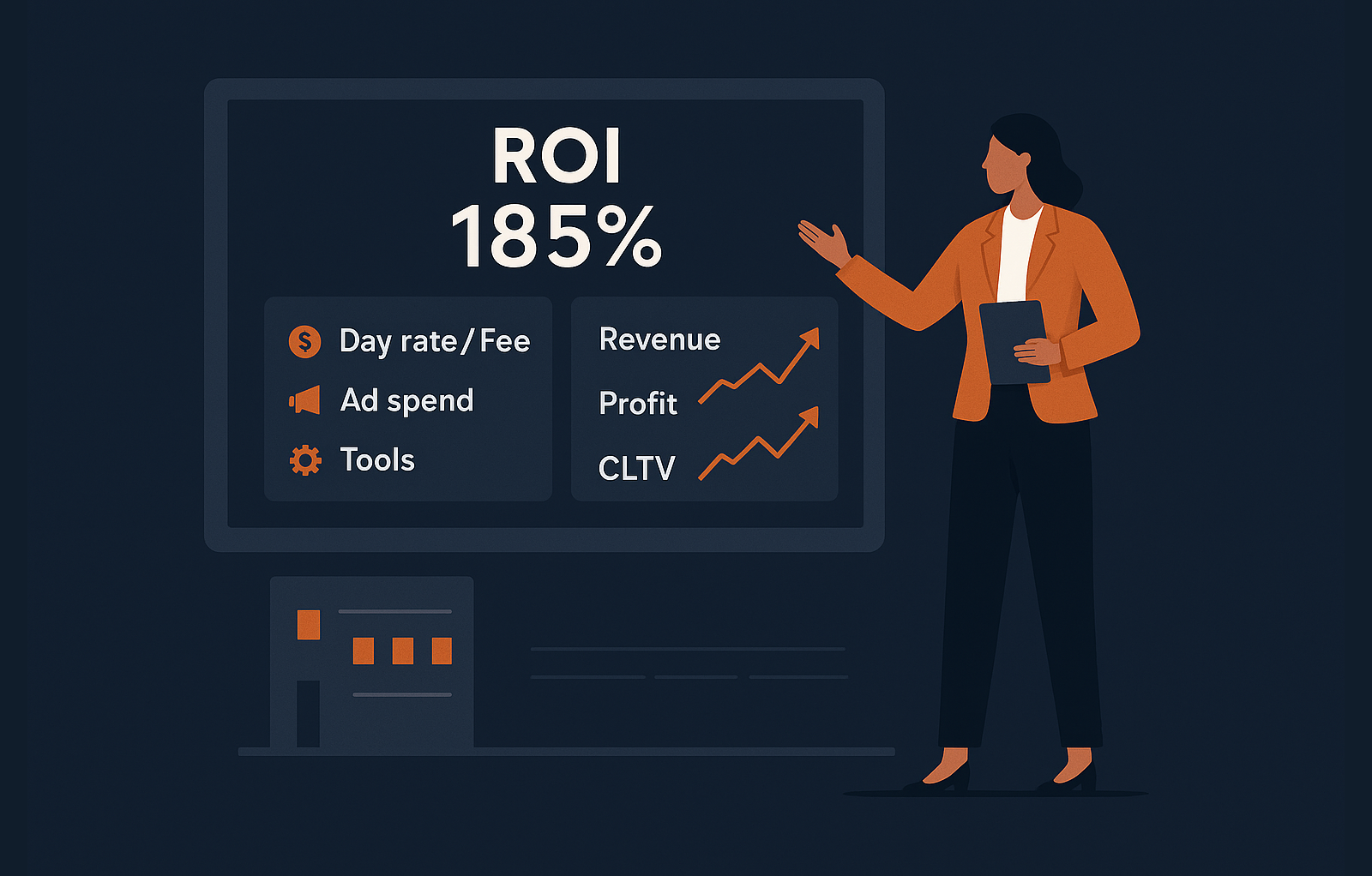
    ROI = (Uplift – Cost) ÷ Cost
    = (£90,000 – £24,000) ÷ £24,000
    = 2.75 → 275% ROI

    Is it perfect? No. Is it good enough for board-level conversations? Yes.


    Step 2: Include cost savings as part of ROI

    A good fractional leader doesn’t just drive more revenue – they often stop you wasting money:

    • Killing unprofitable campaigns
    • Consolidating tools and subscriptions
    • Negotiating smarter with agencies
    • Stopping “pet projects” that never deliver

    If they’ve saved, say, £2,000/month in wasted spend without harming performance, that’s £12,000 over 6 months – add that to the “uplift” side of the equation.

    Suddenly, they’re not just a cost – they’re actively paying for themselves.


    5. Track leading indicators (the early wins)

    Financial ROI often lags. You may not see the full impact on revenue and profit for several months, especially in longer sales cycles.

    That’s where leading indicators come in. These are earlier signals that things are moving in the right direction.

    Examples:

    • Website conversion rate up from 1.2% → 1.8%
    • AOV up from £95 → £110
    • Email now contributing 15% of revenue, up from 6%
    • Blended CPA down from £50 → £38
    • ROAS improved on key campaigns
    • Lead-to-opportunity conversion rising
    • Sales cycles shortening

    These are all things a fractional leader should be influencing before the full revenue impact lands.

    Agree which leading indicators you’ll track together, and review them monthly.


    6. Don’t ignore non-financial ROI (but make it visible)

    Some of the biggest benefits are harder to quantify but still very real:

    • Founder time freed up from trying to “do marketing” themselves
    • Better decisions – fewer knee-jerk changes to strategy
    • Calmer team – less chaos, clearer priorities
    • Stronger marketers – team members levelling up under proper leadership
    • Cleaner data – you can actually trust your numbers now
    • Better agency relationships – clearer briefs, more accountability

    You can still measure some of this:

    • Ask your team and key stakeholders to rate, monthly or quarterly (1–10):
      • Clarity of marketing priorities
      • Confidence in the plan
      • Quality of cross-team communication
      • Stress levels around marketing and launches
    • Log founder time – roughly how many hours per week you spent on marketing decisions before vs after

    These won’t go into a strict ROI formula, but they absolutely matter when deciding whether to continue the engagement.


    7. Use a simple monthly scorecard

    To keep it practical, you can roll all of this into a one-page scorecard reviewed every month.

    For example, rate each area 1–5:

    1. Growth & revenue impact
      • Are key financial metrics moving in the right direction?
    2. Efficiency & spend quality
      • Are we getting more from the same budget, or the same from less?
    3. Clarity & decision-making
      • Do we know our priorities? Are decisions faster and better?
    4. Team capability & confidence
      • Are our marketers and sales team more capable and aligned?
    5. Founders’ peace of mind
      • Do we feel in control of marketing, or still in the dark?

    Over 3–6 months, you should see those scores trend upwards alongside your financial metrics. If not, that’s a red flag.


    8. Be realistic about attribution

    One important nuance: a fractional marketing leader doesn’t work in a vacuum.

    Sales, product, operations, the economy – all of these affect performance.

    You’re not trying to prove that “every extra pound came solely from them”. Instead, ask:

    • Are we performing meaningfully better than our baseline in the areas they influence?
    • Would we realistically have made the same progress without their involvement?

    If:

    • Revenue and contribution are up
    • CPAs are down or stable
    • Marketing feels more controlled and less chaotic
    • The team is clearly stronger
    • And this all happened after bringing them in

    …you can be confident you’re getting positive ROI, even if you can’t attribute every penny perfectly.


    9. When to question the ROI

    It’s equally important to know when things aren’t working.

    Start asking hard questions if:

    • There was no clear baseline and still no clear metrics
    • You’re getting a lot of activity but no noticeable shift in outcomes
    • Reporting is full of vanity metrics (impressions, likes) but light on revenue, margin and CPA
    • The team still seem as lost or overwhelmed as before
    • You’ve been working together for 6+ months and:
      • Revenue is flat or down with no clear explanation
      • Efficiency hasn’t improved
      • There’s no strong case for “we’d be worse off without this”

    At that point, either the scope is wrong, or the relationship is.


    Bringing it all together

    Measuring the ROI of a fractional marketing leader isn’t about building a perfect financial model. It’s about answering, with a straight face:

    • Are we making more money, more efficiently, than before?
    • Is our marketing function stronger and more controlled?
    • Has this person’s involvement clearly moved us forward?

    If you establish a baseline, agree clear goals, track both financial and non-financial impact, and review everything with a simple scorecard, you’ll know the answer.

    And if the answer is “yes”, their fee stops feeling like a cost – and starts looking like one of the smartest investments you’ve made.

  • What Does a Fractional Marketing Leader Actually Do?

    What Does a Fractional Marketing Leader Actually Do?

    “Fractional marketing leader” sounds fancy. In reality, it just means this:

    You get a senior Head of Marketing / CMO for a slice of the week, instead of paying for them full-time – but they’re still responsible for making marketing actually work.

    If you’re a founder or MD, that can feel a bit vague. Are they a strategist? A consultant? A manager? A glorified freelancer?

    Here’s what a good fractional marketing leader actually does in the real world.


    1. Owns the marketing outcome, not just the activity

    Most businesses already have marketing activity:

    • Google Ads running
    • An agency doing “SEO”
    • Someone posting on LinkedIn or Instagram
    • A website that was “redone” two years ago
    • An email platform you’re not really using

    A fractional marketing leader’s first job is to own the outcome, not the list of tasks.

    That usually means:

    • Agreeing clear, commercial goals (e.g. “grow online revenue by 30% without killing margin”)
    • Mapping how marketing can actually influence those goals
    • Holding the threads: channels, agencies, people, budget and reporting

    They become the person who answers the question:
    “Is our marketing working, and what are we doing about it?”


    2. Diagnose what’s really going on

    Before they recommend anything, a good fractional leader gets under the bonnet.

    That typically includes:

    • Reviewing analytics (site traffic, conversion rate, AOV, repeat purchase, lead quality)
    • Looking at channel performance (PPC, SEO, email, social, marketplaces, etc.)
    • Understanding your margin structure and which products/services really matter
    • Listening to sales calls or talking to the sales team
    • Reviewing your customer journey from first click to repeat purchase
    • Asking annoying-but-essential questions about stock, lead times, pricing and ops

    The goal isn’t a pretty audit document. It’s to answer:

    • Where are we leaking money?
    • Where are we leaving money on the table?
    • Which levers will move the needle fastest in the next 90 days?
    • What needs fixing for the long term?

    Only then do they talk about plans.


    3. Set a clear strategy and 90-day plan

    Once they understand the reality, they create two things:

    1. A simple strategy – who you’re targeting, what you’re selling, why people should care, and which channels matter most.
    2. A ruthless 90-day plan – what will actually be done, by whom, and in what order.

    That might look like:

    • Focusing on one or two priority customer segments
    • Choosing a handful of hero products or services to push
    • Deciding which channels to double down on – and which to pause
    • Defining your core message and offers
    • Lining up quick wins (e.g. low-hanging CRO fixes, obvious PPC waste, simple email flows)

    The key thing: it’s not theoretical.

    It’s:

    • Specific (“We will pause X, move £Y to Z, fix these three pages, and build these two campaigns.”)
    • Sequenced (“Weeks 1–4: fix foundations. Weeks 5–8: scale what’s working.”)
    • Tied to numbers (revenue, margin, CPAs, conversion rates, lead-to-opportunity, etc.)

    4. Lead your marketers, not replace them

    A fractional marketing leader is not there to “do all the marketing”. They are there to lead it.

    In practice, that means:

    • Giving your existing marketers clarity on priorities
    • Helping them decide what not to do
    • Setting expectations around quality and speed
    • Running regular check-ins and performance reviews
    • Coaching them so they grow, rather than just executing orders

    If you don’t have a team yet, they can also:

    • Help you decide what roles you actually need (in-house vs agency vs freelancers)
    • Write job specs
    • Sit in on interviews
    • Onboard new hires so they’re productive quickly

    You’re buying not just skills, but leadership and judgement.


    5. Direct and challenge your agencies

    Many businesses are over-reliant on agencies who are:

    • Doing some good work
    • But not always aligned to your commercial priorities
    • And often not properly challenged or briefed

    A fractional marketing leader acts as your side of the table.

    They will:

    • Write tighter, more commercial briefs
    • Check whether the agency’s proposed work links back to your goals
    • Challenge spend that isn’t justified
    • Ask awkward questions about performance and reporting
    • Make sure agencies aren’t marking their own homework

    This doesn’t have to be confrontational. Good agencies are usually relieved to have a grown-up marketing contact who understands their world and can make decisions.


    6. Own performance and reporting (in plain English)

    Founders don’t want a 40-page slide deck every month. They want to know:

    • Are we up or down?
    • Why?
    • Is it a blip or a trend?
    • What are we doing about it?

    A fractional leader designs a simple, repeatable performance rhythm, for example:

    • A monthly marketing review with the founder/MD
    • A lean report with:
      • Key numbers (revenue, margin, leads, ROAS, conversion rate, AOV, repeat purchase, etc.)
      • Commentary on what moved and why
      • Decisions made and actions for next month

    They translate data into decisions. No hiding. No fluff.

    Over time, this rhythm makes marketing feel calmer and more controlled, even if the numbers aren’t perfect yet.


    7. Fix processes and foundations

    Often, the block to growth isn’t “no ideas”. It’s foundations:

    • No proper tracking or attribution
    • Slow sign-off processes
    • A CMS that makes changes painful
    • No templates for campaigns or landing pages
    • No standard way of launching new products or offers

    A fractional marketing leader will quietly:

    • Introduce better ways of working (campaign checklists, templates, naming conventions)
    • Tighten the relationship between marketing, sales, and ops
    • Clean up tracking so your data is trustworthy
    • Simplify workflows so things actually get done

    This is the unglamorous work that makes every future campaign more effective.


    8. Help you make better commercial decisions

    The best fractional leaders are commercially minded.

    They don’t just ask, “Will this campaign get clicks?”
    They ask, “Does this make sense for our margins, capacity and risk?”

    They’ll be involved in questions like:

    • Should we discount or add value instead?
    • Which products should be front and centre on the website?
    • Should we focus on acquisition or driving repeat purchases?
    • Is this new channel worth testing now, or a distraction?
    • How do we add D2C without upsetting distributors or retailers?

    They become a sounding board for growth decisions – someone who understands both marketing and the operational reality of your business.


    9. Build something that outlives them

    A fractional marketing leader who does their job well is not trying to stay forever.

    Their aim is to:

    • Build a clearer strategy
    • Put better foundations in place
    • Lift the capability of your people
    • Leave you with a marketing function that can run without constant drama

    That might end in:

    • Hiring a full-time Head of Marketing
    • Reducing their days as the team grows
    • Or staying on in a lighter-touch advisory capacity

    Either way, you should feel that:

    • Marketing is more controlled and predictable than before
    • You understand what’s working and what isn’t
    • Your team are stronger and more confident
    • The engine will keep running, even if they step back

    10. So what are you actually buying?

    You’re not just buying a few days a month.

    You’re buying:

    • Ownership of marketing outcomes
    • Clarity on where growth will really come from
    • Focus on the right channels and products
    • Leadership for your team and agencies
    • Honest reporting you can actually act on
    • Calmer, more predictable marketing that supports your wider goals

    That’s what a fractional marketing leader actually does.

    If your current reality is “lots of activity, not much direction”, then bringing in someone to own this – even for just a few days a month – can be the difference between random acts of marketing and a proper growth engine.

  • Fractional CMO vs Fractional Head of Marketing: What’s the Difference?

    Fractional CMO vs Fractional Head of Marketing: What’s the Difference?

    If you’re a founder or MD trying to level up your marketing, you’ve probably seen both titles thrown around: fractional CMO and fractional Head of Marketing. They sound similar; they’re both senior, they’re both part-time and they both talk about strategy and growth.

    So what’s the actual difference – and which one do you need?

    At the simplest level:

    • A fractional CMO is there to shape board-level marketing and growth strategy.
    • A fractional Head of Marketing is there to run the marketing function day-to-day and turn strategy into execution.

    You can think of it as “where they sit in the business” and “how close to the work they get”.

    Let’s break it down.


    What is a Fractional CMO?

    A fractional CMO (Chief Marketing Officer) behaves like a part-time member of your executive team.

    They’re focused on questions like:

    • What markets should we be in over the next 3–5 years?
    • How do we position the brand against current and future competitors?
    • How does marketing support the overall growth and exit plan?
    • Where should we invest (and not invest) to maximise long-term value?

    Typical responsibilities:

    • Sitting in leadership or board meetings
    • Owning the overall go-to-market and brand strategy
    • Aligning marketing with sales, product, finance and operations
    • Setting high-level budgets and investment priorities
    • Defining the KPIs that really matter to the business
    • Making decisions about major shifts: new markets, acquisitions, big rebrands, pricing strategy, etc.

    They’re often less involved in the fine-grain “how” of the work – the campaign calendars, landing pages, email flows – and more focused on direction, priorities and trade-offs.

    A fractional CMO is usually best for businesses that:

    • Are £10m+ revenue or aiming for a significant fundraise or exit
    • Have an existing marketing team and/or agencies in place
    • Need a senior voice who can talk marketing and commercial strategy with investors, the board or PE

    What is a Fractional Head of Marketing?

    A fractional Head of Marketing is closer to the engine room.

    They still think strategically, but their main focus is:

    “How do we translate the strategy into a concrete plan and actually get it done?”

    Typical responsibilities:

    • Turning business goals into a marketing roadmap and campaigns
    • Managing and coaching in-house marketers
    • Briefing and directing agencies or freelancers
    • Making channel-level decisions (PPC, SEO, email, social, marketplaces, etc.)
    • Owning day-to-day performance: leads, revenue, ROAS, conversion rate, AOV, repeat purchase
    • Creating or improving processes, reporting and ways of working

    They’re more hands-on – reviewing ad accounts, challenging targeting, improving landing pages, refining email flows, prioritising what the team works on next.

    A fractional Head of Marketing is usually best for businesses that:

    • Are in the £1m–£20m revenue range
    • Have some marketing activity, but it’s a bit messy, reactive or disjointed
    • Need someone to own the function, not just advise from the sidelines
    • Don’t yet have the budget (or need) for a full-time senior hire

    Board-Level Strategy vs Hands-On Leadership

    The key difference isn’t just seniority – it’s where they create value.

    A fractional CMO is about board-level strategy:

    • Long-term positioning and market strategy
    • Brand architecture (how your products and sub-brands fit together)
    • Decisions around pricing, packaging and propositions
    • Ensuring marketing has a voice in big commercial decisions
    • Reporting to investors or the board on marketing’s contribution to growth

    They’ll ask questions like:

    • “Should we enter Germany now or wait 18 months?”
    • “What categories do we need to own if we want to be the leader in this space?”
    • “How do we need to reposition to justify higher prices or bigger deals?”

    They may influence the day-to-day, but they’re not typically the person building the campaign calendar or checking whether your UTM tags are set up properly.

    A fractional Head of Marketing is about hands-on leadership:

    • Taking the overall strategy and turning it into a concrete plan
    • Making sure the right things get done, in the right order
    • Bringing structure, focus and pace to your marketing efforts
    • Coaching junior/mid-level marketers to perform at a higher level
    • Owning performance reviews and making adjustments every week/month

    They’ll ask questions like:

    • “What are the 3 biggest levers we can pull in the next 90 days?”
    • “Which products should we focus on first for D2C?”
    • “Why is this campaign not converting – is it the offer, the targeting or the landing page?”

    They bridge the gap between strategy and execution.


    Which Do You Need Right Now?

    Here’s a simple way to think about it.

    You probably need a fractional Head of Marketing if:

    • You’re turning over somewhere between £1m and £20m
    • You’ve grown mostly through founder hustle, sales and referrals
    • You’ve got some channels running (PPC, SEO, email, socials), but:
      • You’re not sure what’s actually working
      • Everything feels tactical and reactive
      • Your team are busy but not always focused on the right things
    • You don’t have a single person who owns marketing end-to-end

    In this case, the biggest win is to sort the engine out: get clarity, a realistic plan, proper measurement, and a calm, competent leader to run it.

    A fractional Head of Marketing will:

    • Create a clear plan for the next 90 days and 12 months
    • Bring alignment between founders, sales and marketing
    • Improve performance from existing spend before asking for more budget
    • Build the foundations for a proper function (processes, reporting, roles)

    Once that’s in place, you might later bring in a fractional CMO to help with larger strategic questions – expansion, M&A, serious brand repositioning, etc.


    You probably need a fractional CMO if:

    • You’re £10m+ and growing, or planning for a fundraise or exit
    • You already have a marketing team and/or agencies delivering day-to-day
    • Investors or the board are asking complex questions about growth strategy
    • You’re exploring big moves: new markets, acquisitions, major rebrands, radical pricing changes
    • You need someone who can challenge and shape the company’s direction, not just marketing activity

    In this case, the biggest win is alignment at the top: sharpening the growth story, ensuring marketing is pulling in the same direction as sales, product and finance, and making smarter big bets.

    A fractional CMO will:

    • Define the overall growth strategy and positioning
    • Decide what markets, segments and propositions to prioritise
    • Work closely with the board or investors on the growth story and metrics
    • Set expectations and guardrails for the Head of Marketing and the team

    Can One Person Do Both?

    Sometimes, especially in smaller businesses, one fractional leader will blend both roles:

    • Board-level conversations about direction and growth
    • Hands-on leadership of the team and channels

    That can work well if:

    • You’re under ~£20m revenue
    • The leadership team is still relatively small
    • You want to avoid having two separate senior marketing roles

    In that case, the title almost matters less than the scope you agree together:

    • How much time is spent on strategy vs day-to-day leadership?
    • Who do they report to, and which meetings do they attend?
    • What are the primary outcomes they’re accountable for in the next 6–12 months?

    Be explicit. If you hire a “fractional CMO” but secretly expect them to be a very hands-on Head of Marketing, you’ll both end up frustrated.


    How to Decide (In Plain English)

    Ask yourself:

    1. What’s my biggest marketing problem right now?
      • “I don’t know what we should do next” → more CMO
      • “I know roughly what we should do, but no one’s owning it or executing it well” → more Head of Marketing
    2. Where is the pain – the boardroom or the engine room?
      • Boardroom: questions about overall direction, markets, brand story, investor conversations
      • Engine room: messy channels, lack of focus, inconsistent execution, no owner
    3. What do I actually want to be different in 12 months?
      • Sharper growth story, stronger position with investors, bigger strategic moves → fractional CMO
      • Better results from current spend, clearer plan, stronger team and processes → fractional Head of Marketing

    Get those answers clear, and the choice usually becomes obvious.


    Final Thought

    Both roles can be transformative.

    • A fractional CMO helps you decide where to go and why.
    • A fractional Head of Marketing makes sure you actually get there.

    Pick the one that solves your biggest problem today – and don’t be afraid to start with practical, hands-on leadership before layering in more board-level strategy later.

  • How to Choose a Fractional Marketing Leader (Without Getting Burned)

    How to Choose a Fractional Marketing Leader (Without Getting Burned)

    Hiring a fractional marketing leader can feel a bit like dating: you’re looking for senior-level commitment without the full-time tie-in, and you need someone who “gets” you quickly enough to make a real difference. Done well, a fractional Head of Marketing / CMO can transform your growth. Done badly, you end up with warm words, thin slides, and no commercial impact.

    This guide will walk you through what to look for, what to avoid, and how to choose the right fractional marketing leader for your business.


    What is a fractional marketing leader?

    A fractional marketing leader is a senior marketer (Head of Marketing, Marketing Director, CMO-level) who works with your business part-time or on a fixed number of days per month, rather than as a full-time employee.

    They typically:

    • Own your marketing strategy and plan
    • Provide leadership and direction for internal teams or agencies
    • Set targets, priorities and budgets
    • Build or refine your marketing function
    • Report on performance to the founder/board

    You get senior expertise and leadership “fractionally”, at a lower cost and risk than hiring someone full-time.


    When does a fractional leader make sense?

    A fractional marketing leader is usually a good fit if:

    • You’ve outgrown “just tactics” – You’re spending on PPC, SEO, email, social or agencies, but it doesn’t feel joined up and you’re not confident it’s all pulling in the same direction.
    • You’re stuck at a revenue plateau – You’ve grown to a certain point on founder energy or sales-led growth, but you’re not sure what levers to pull next.
    • You can’t yet justify a full-time senior hire – You need strategic leadership, but your budget doesn’t stretch to a £80–120k+ salary plus pension, bonus, and overheads.
    • You’re planning a step-change – For example, moving from B2B to D2C, replatforming your website, entering a new market, or rebranding.
    • Your team is busy, but not focused – You have in-house marketers, but they’re spinning plates without a clear roadmap or someone senior to guide them.

    If two or more of these resonate, a fractional leader is worth serious consideration.


    1. Start with your real problem, not their job title

    Before you look at any CVs or LinkedIn profiles, write down (honestly) what you need help with over the next 12–18 months. For example:

    • “We need to grow online revenue by 30% without wrecking margin.”
    • “We need to launch a D2C channel without upsetting our distributors.”
    • “We need a proper marketing strategy and someone to lead the team day-to-day.”

    The right fractional leader is the one whose track record aligns with those problems.

    Avoid vague briefs like “we need someone to sort marketing” – that invites vague outcomes.


    2. Look for depth of experience relevant to your stage

    Not all senior marketers are created equal. You’re not just looking for a big brand name; you’re looking for someone who has:

    • Worked with businesses at your stage and size – e.g. £1m–£20m revenue, founder-led, lean teams.
    • Owned a number, not just “delivered campaigns” – They should be able to talk about revenue, profit, ROAS, CLTV, cost per acquisition, and contribution margin in plain language.
    • Experience in similar models – B2B, D2C, manufacturing, SaaS, wholesale… whatever matches you. The closer the model, the shorter their learning curve.

    Good questions to ask:

    • “Tell me about a business that looked like ours when you started. What changed during your time there?”
    • “What numbers were you directly accountable for?”
    • “What were the biggest commercial decisions you influenced?”

    3. Check they’re both strategic and hands-on

    One of the biggest traps with fractional leaders is hiring someone who can talk beautifully about strategy but can’t (or won’t) help you actually get things done.

    You want someone who can:

    • Set a clear strategy and prioritised roadmap
    • Translate that into practical actions for your team and agencies
    • Roll up their sleeves when needed (e.g. briefing campaigns, reviewing ad accounts, sense-checking landing pages, refining email flows)

    Ask for specific examples:

    • “Can you walk me through a plan you wrote and then delivered?”
    • “How involved were you in execution?”
    • “If we gave you 10 hours this month, how would you spend them for maximum impact?”

    You’re looking for concrete answers, not just “I’d review the strategy”.


    4. Assess leadership and communication style

    A fractional leader is not just a “consultant who sends decks”. They are, for a slice of time, your Head of Marketing.

    They need to be able to:

    • Earn trust quickly with founders, finance, sales and ops
    • Give your team clarity – what matters, what doesn’t, and why
    • Hold people accountable without creating drama
    • Explain trade-offs and priorities in plain English

    Pay attention to:

    • Do they listen properly, or just talk?
    • Do they ask probing questions about your customers, operations and constraints?
    • Do they simplify complexity, or make it sound more complicated than it needs to be?

    If they can’t explain their ideas in a way your team could understand and act on, they’re not the right fractional leader for you.


    5. Understand their engagement model and availability

    “Fractional” can mean many things. Clarify:

    • How many days or hours per month will they realistically give you?
    • What’s included – strategy, leadership, calls with agencies, team 1:1s, reporting, ad-hoc questions?
    • How they like to work – recurring meetings, async updates, Slack/Teams, in-person days?

    You want enough time from them to:

    1. Understand your business and data
    2. Build a clear plan
    3. Support your team in executing it
    4. Review, report and refine every month

    A good fractional leader will be honest about what can’t be done in the time available and will help you prioritise accordingly.


    6. Ask for proof, not just promises

    Any experienced fractional leader should be able to back up their claims with:

    • Case studies or examples (with specifics, even if anonymised)
    • Clear before-and-after stories: “We took X from £Y to £Z in 18 months by doing A, B, C.”
    • LinkedIn profiles and references from previous clients or employers

    Good questions to ask:

    • “What are you most proud of achieving with a client like us?”
    • “What went wrong on a project, and what did you learn from it?”
    • “Can I speak to one or two people you’ve worked with recently?”

    You’re not looking for perfection; you’re looking for honesty, learning and consistent impact.


    7. Watch out for red flags

    Some warning signs to be wary of:

    • They immediately pitch tactics without asking questions – “You just need more Google Ads/TikTok/SEO.” They don’t know that yet.
    • They can’t talk about numbers – If everything is about “brand awareness” with no link to revenue or margin, proceed with caution.
    • They bad-mouth every past employer or client – One or two tricky stories are normal. A pattern of blame is not.
    • They insist on long lock-in contracts from day one – Reasonable commitment is fine, but you should feel there’s a way to pause or review if it’s not working.
    • They seem more interested in their “framework” than your reality – Frameworks are useful, but your business isn’t a case study; it’s a living, messy thing.

    Trust your instincts. If something feels off in how they communicate or behave early on, it usually doesn’t get better.


    8. Run a small, focused trial first

    Before committing to a long-term agreement, consider starting with a well-defined initial engagement, such as:

    • A marketing audit and roadmap (e.g. 4–6 weeks)
    • A D2C or channel-readiness review
    • A 90-day growth plan with clear priorities and KPIs

    This lets you see:

    • How they think
    • How they communicate
    • Whether they understand your business
    • Whether your team responds well to them

    At the end of that piece of work, you’ll have something tangible (a plan, a set of decisions, prioritised actions) and a much clearer sense of whether they’re the right long-term fractional partner.


    9. Agree what success looks like

    Finally, before you start, define together:

    • The timeframe you’re working to (e.g. 6–12 months)
    • The primary outcomes (e.g. revenue growth, margin improvement, channel readiness, team capability)
    • The leading indicators you’ll track (e.g. conversion rate, AOV, repeat purchase rate, lead-to-opportunity rate)
    • How often you’ll review progress (e.g. monthly performance reviews, quarterly strategy check-ins)

    A good fractional marketing leader will push you to be specific. That’s a good sign.


    Closing thoughts

    Choosing a fractional marketing leader is not about finding the person with the flashiest slides or the biggest brand logos on their CV. It’s about finding someone who:

    • Understands businesses at your size and stage
    • Can think strategically and act practically
    • Communicates clearly and honestly
    • Cares about your commercial outcomes as much as you do

    Get those things right, and a fractional marketing leader can be the catalyst that takes your marketing from “busy, but random” to focused, consistent growth – without the cost and risk of a full-time hire.