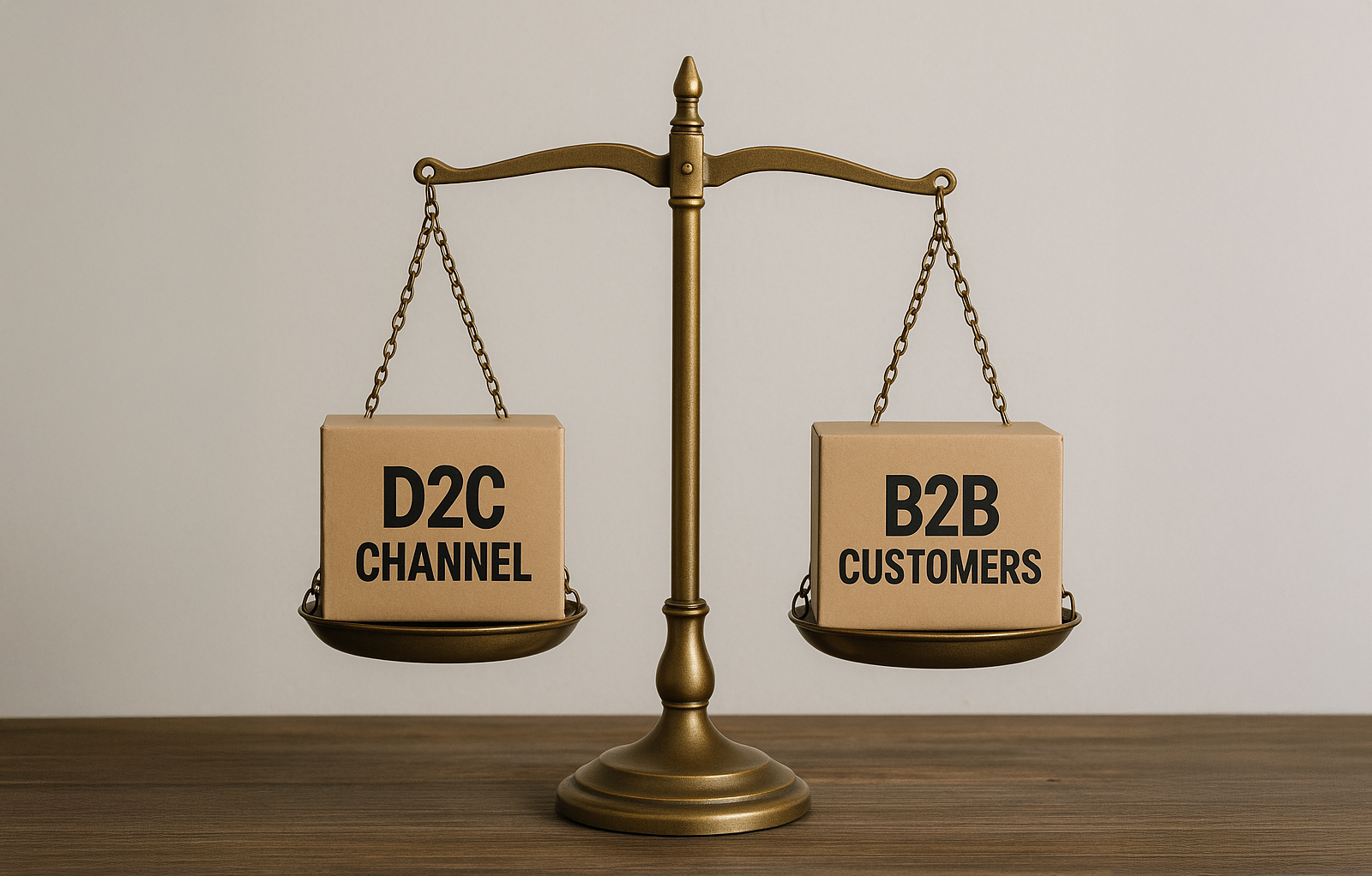
For many B2B manufacturers and distributors, launching a D2C channel feels a bit like inviting a new child into the family – exciting, full of potential and guaranteed to cause tension if you don’t manage the relationships carefully.
Your trade partners have helped build your brand. They’ve taken risks on your stock, invested in your category, and educated your customers. The fastest way to destroy that goodwill is to “go D2C” overnight with no explanation and a pricing strategy that makes them look expensive.
The good news: you can add a D2C channel and keep your distributors on side. But you have to be intentional.
Here’s how to launch D2C without alienating the people who got you this far.
1. Decide the job of your D2C channel first
Most channel conflict comes from confusion about what your D2C site is for.
If your distributors think you’re trying to replace them, they’ll push back. If they can see that D2C plays a different role in the ecosystem – and can benefit them – the conversation changes.
Common strategic roles for a D2C channel:
- Brand flagship
The best possible presentation of your range, content, story and values. A place where you control photography, copy, education and category structure – which also makes your brand easier to sell for distributors. - Test lab
A controlled environment for testing new SKUs, bundles, pricing, messaging and promotions before rolling them out to partners, armed with data. - Long tail & accessories
A home for niche variants, spares and bundles that distributors don’t want to carry, but customers sometimes need. - Service & support hub
Centralised product information, FAQs, troubleshooting and content that supports both end users and your partners’ sales teams.
Before you even brief an agency, be able to finish this sentence clearly:
“Our D2C channel exists to… [X], and complements our distributors by… [Y].”
That line becomes the anchor for every conversation with trade partners.
2. Build a fair pricing architecture (and stick to it)
If your D2C site undercuts your own distributors, you will lose trust. It really is that simple.
You need a pricing architecture that makes sense commercially and politically:
- Respect recommended retail pricing
Hold RRP on your own site as the default. Allow distributors to choose their own price positioning, but don’t make them look foolish for supporting your brand. - Compete with value, not raw price
If you want to make D2C more attractive, use:- Bundles that feel premium (e.g. kits, starter sets, refills)
- Extended guarantees or care packages
- Content, education and community benefits
rather than aggressive discounting.
- Agree promotion guardrails
Set clear internal rules on:- How often you’ll run site-wide discounts
- Maximum discount depth
- Key dates (e.g. Black Friday) where you’ll align with partners or give them a head start
Then communicate this openly with distributors. The goal is that when they see your pricing, it looks predictable and respectful, not erratic and opportunistic.
3. Use range strategy to reduce conflict, not create it
You don’t have to sell everything D2C on day one.
Thoughtful range planning can ease a lot of friction:
- Core range parity
Keep your best-selling, high-volume SKUs available through your existing distributors. Don’t hoard the winners for yourself. - D2C-only products with a logic
If you create D2C-exclusive items, make sure there’s a story your partners can accept:- Personalised or made-to-order products
- Niche colours/variants with low volume
- Direct subscription packs
- Partner-only products
Similarly, maintain SKUs that are only available via distributors – for trade, bulk or specialist applications. This sends a strong signal: “You still have something unique.” - Bundle differentiation
Offer different bundle structures D2C vs trade:- D2C: curated sets, starter kits, lifestyle bundles
- Trade: case quantities, mixed boxes, commercial packs
The aim is not to create artificial complexity, but to show that your D2C channel and your distributors are serving slightly different needs.
4. Set rules of engagement for marketing and search
Most visible channel conflict happens on Google and marketplaces, not in boardrooms.
If your brand, your distributors and large retailers are all bidding on the same terms with no coordination, costs go up and relationships go down.
Decide in advance:
- Which keywords you’ll bid on directly
For example:- You focus on brand + generic terms and protect your own name.
- You give distributors priority on some high-intent category terms.
- How you’ll handle Shopping ads
One option is:- You run Shopping primarily as a brand-defence and content play.
- Distributors focus on the long tail and price-driven customers.
- Marketplace strategy
If you’re going to list on Amazon, eBay or others:- Will you sell directly, endorse a “preferred seller”, or leave it entirely to partners?
- How will you handle MAP (minimum advertised price) and content standards?
Documenting these “rules of engagement” and sharing them early shows partners you’re thinking about the whole ecosystem, not just your own site.
5. Protect and reward your best partners
The reality is that some distributors are strategically more important than others. Those relationships need reinforcing, not eroding.
Consider:
- Early involvement
Bring key partners into the D2C discussions early. Ask their views. Let them sanity-check your plans. You may not implement everything they suggest, but they’ll feel respected. - Exclusive opportunities
Offer your top partners:- Early access to new product launches you’ve validated D2C
- Co-branded campaigns based on data from your direct customers
- Joint content (guides, videos, training) that positions their brand strongly too
- Data sharing
Your D2C channel will give you rich insights about end users: who they are, what they buy together, how often they repurchase. Sharing appropriate, aggregated insights with partners helps them trade the category better and proves that D2C isn’t just about you. - Service guarantees
Reassure them that:- Trade orders still get priority allocation
- Your D2C warehouse won’t “steal” their stock in peak periods
- Lead times and support levels remain as agreed
The unspoken message you want to send is: “We are building this new channel with you in mind, not in spite of you.”
6. Communicate like adults: before, during and after launch
Silence breeds paranoia. Rumour travels faster than your official comms.
Treat your D2C launch as a change-management process:
Before launch
- Share your strategic rationale and D2C’s defined “job” in your channel mix.
- Outline pricing, range and marketing principles.
- Invite feedback from key accounts and listen carefully for genuine risks you may have missed.
At launch
- Communicate the go-live date and what will (and won’t) change for distributors.
- Provide talking points for their sales teams if end customers mention your new site.
- Reassure them with real examples of how you’re sticking to your commitments.
After launch
- Hold regular reviews with major partners.
- Share early performance data and what you’re learning.
- Show how those learnings are feeding into better support, content and innovation for the whole channel.
Handled well, your D2C launch can actually increase trust because it demonstrates transparency and competence.
7. A quick checklist: are you ready to move without blowing things up?
You’re in a strong position to launch D2C without alienating distributors if you can honestly say:
- We’ve clearly defined the role of D2C in our overall channel strategy.
- Our pricing plan ensures we don’t systematically undercut our partners.
- Our range architecture gives both D2C and distributors a meaningful role.
- We’ve agreed internal rules for paid search, Shopping and marketplaces.
- We have a plan to share data, content and benefits back into our trade network.
- Our key partners understand what we’re doing, why, and how it affects them.
If you’re not there yet, that doesn’t mean you shouldn’t do D2C. It simply means your first job is alignment, not a website build.
Get the relationships right, and your D2C channel can become a powerful engine for growth, insight and brand strength – not a source of resentment.
And if “we don’t want to upset our distributors” is the only thing keeping you from exploring D2C, that’s exactly the kind of fear that disappears once you have a proper plan.
Need help?
Leave a Reply